10 Best Tips for Stainless Steel Welding Techniques and Practices?
Stainless Steel Welding is a critical skill in the metalworking industry. It demands precision and expertise. James McCarthy, a renowned welding engineer, once stated, "Mastering stainless steel welding requires patience and a deep understanding of techniques." This highlights the importance of thorough knowledge in this field.
Many welders struggle with the complexities involved. The combination of materials can present challenges. Navigating various welding methods needs both skill and experience. Understanding the properties of stainless steel is essential. A misstep in technique can lead to defects and failures.
Proper practice and techniques can significantly increase quality. However, even seasoned welders can encounter problems. Some common issues require attention and reflection. Knowledge of tips and best practices in stainless steel welding is incredibly valuable. By focusing on these details, welders can improve their craft and outcomes.
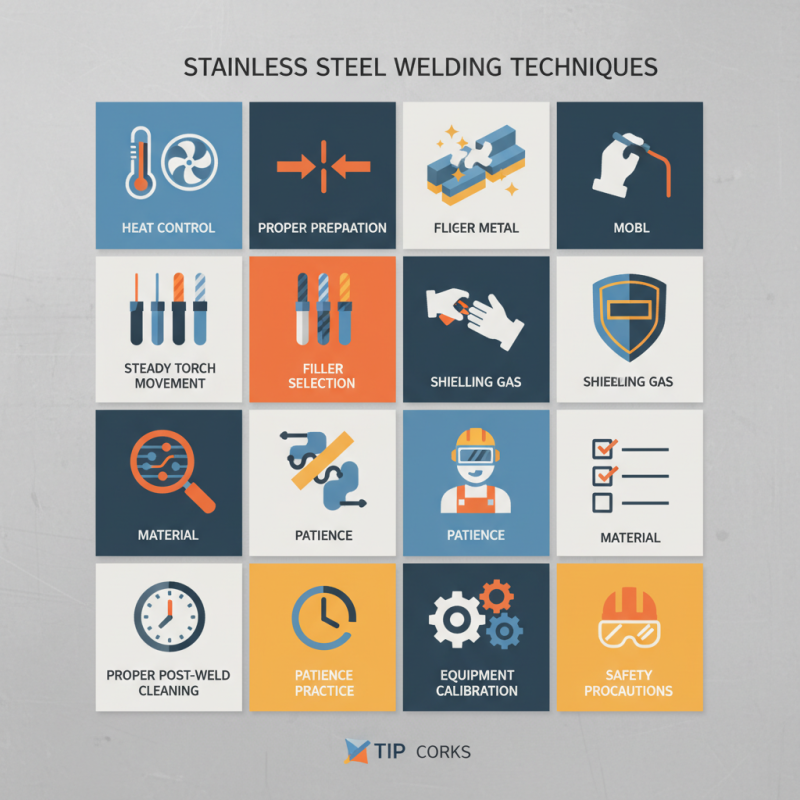
Essential Preparation Steps for Successful Stainless Steel Welding
Successful stainless steel welding begins with essential preparation steps. Ensuring a clean surface is crucial. Any contaminants can lead to defects. Industry reports highlight that a staggering 60% of welding defects stem from improper surface preparation. This includes rust, oil, and grease. A simple wipe with acetone can make a significant difference.
Tip: Always inspect your tools before you start. Dull or damaged equipment may lead to ineffective welds. Additionally, proper PPE (personal protective equipment) is vital. Protecting eyes and skin isn’t just smart; it’s necessary.
Consider your workspace environment. A well-ventilated area enhances weld quality. Poor ventilation can cause trapped fumes. This compromises both safety and quality. Sometimes, even minor adjustments in positioning can improve results. Reflect on whether your workspace is truly conducive to high-quality work.
Tip: Test welds before proceeding. Small practice runs can reveal issues early. Use these tests to refine your technique. They are key to consistent success.
Choosing the Right Filler Material for Stainless Steel Welding
Choosing the right filler material is crucial for stainless steel welding. The filler rod should match the base metal’s properties closely. Common choices include 304 and 316 stainless steel filler rods. Each type has its own unique characteristics. The 316 rod has added molybdenum, which helps resist corrosion better than the 304. However, this can complicate the welding process.
In practice, the wrong filler choice can lead to weak joints. It may result in cracking or corrosion down the road. The heat input during welding can change the filler’s properties. Find a filler that balances strength and ductility. Test different options to see what works best for your specific project. It's common to make mistakes here. A small change can affect the weld's quality.
Working with stainless steel also requires attention to detail. Cleanliness is vital. Contaminants can compromise the weld, no matter the filler material. Be sure to prepare surfaces properly. A clean, smooth weld area leads to stronger joints. Reflecting on past experiences can guide future choices. Each project teaches new lessons about the right materials and techniques.
10 Best Tips for Stainless Steel Welding Techniques and Practices
| Tip |
Description |
Recommended Filler Material |
| 1. Clean the Surface |
Ensure that the stainless steel surfaces are clean and free of rust, grease, or contaminants. |
ER308L |
| 2. Choose the Right Process |
Select the appropriate welding process such as TIG, MIG, or stick welding based on the thickness and application. |
ER309L |
| 3. Control Heat Input |
Keep the heat input low to prevent warping and distortion of the stainless steel. |
ER316L |
| 4. Use Backing Bars |
Implement backing bars to provide support and reduce weld burn-through. |
ER308L |
| 5. Select the Right Shielding Gas |
Use an appropriate shielding gas such as Argon with a mix of CO2 for MIG welding. |
N/A |
| 6. Maintain Proper Arc Length |
Keep a consistent arc length to ensure a stable heat input. |
ER70S-6 (for filler if needed) |
| 7. Incorporate Post-Weld Cleaning |
Clean the welded area to remove any oxidation or discoloration for aesthetic and durability reasons. |
N/A |
| 8. Mind the Joint Design |
Use proper joint designs to promote effective weld penetration and strength. |
ER308L |
| 9. Limit the Use of Filler Material |
Only use the filler material when necessary to achieve the desired weld quality. |
ER316L |
| 10. Regular Equipment Maintenance |
Keep welding equipment in good condition to ensure optimal performance. |
N/A |
Mastering Welding Techniques: MIG, TIG, and Stick for Stainless Steel
When mastering welding techniques for stainless steel, MIG, TIG, and stick methods stand out. These techniques cater to different applications, ensuring versatility. MIG welding is favored for its speed and ease of use. It accounts for about 60% of the welding processes in industries today. This method is ideal for thin materials, often providing a cleaner finish but requires practice to avoid burn-through.
TIG welding shines in its precision and control. It allows for high-quality welds on intricate joints and thicker materials. The American Welding Society notes that proficiency in TIG can significantly reduce post-weld cleaning times. However, it can be challenging. Many beginners struggle with maintaining an arc, leading to inconsistent results.
Stick welding, while traditional, holds its ground due to its simplicity and effectiveness in outdoor conditions. Nearly 30% of fabricators still prefer this method. It’s more forgiving but can lead to slag inclusions if not done correctly. Each technique’s challenges underline the importance of practice and precision. Refining skills in these methods enhances overall performance and the quality of stainless steel projects.
Best Practices for Post-Weld Inspection and Quality Control
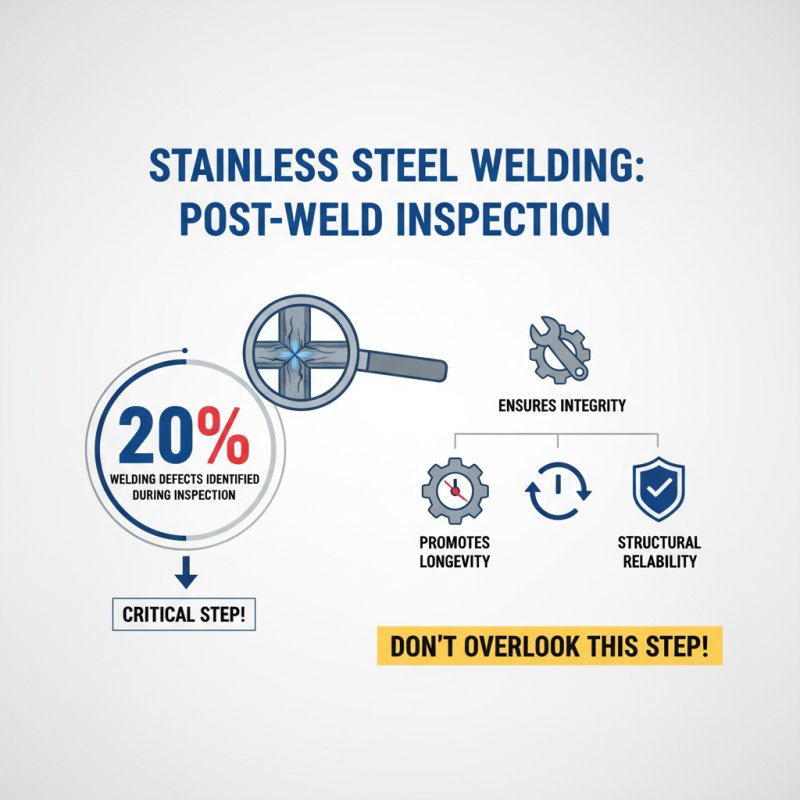
Post-weld inspection is a critical aspect of stainless steel welding. It ensures the integrity and longevity of welded structures. According to industry reports, approximately 20% of welding defects are identified during post-weld inspections. This highlights the importance of not overlooking this step.
Techniques such as visual inspection and ultrasonic testing are essential. Visual inspection can catch surface defects like cracks and porosity. Ultrasonic testing offers a deeper insight, detecting internal flaws that aren't visible with the naked eye. A survey indicated that companies utilizing comprehensive inspection protocols reduce failure rates by up to 30%. However, even with rigorous practices, some defects may still slip through, highlighting the need for continuous improvement.
Quality control should not only focus on the end product but also on process consistency. Training welders on techniques and inspection methods can significantly improve outcomes. Regular audits can uncover areas needing attention, helping to refine processes. Interestingly, a study found that teams with ongoing training initiatives reported 25% fewer defects. This reflects a culture of quality that many organizations strive for, yet some still struggle to uphold consistently.
Safety Measures and Precautions in Stainless Steel Welding Operations
Welding stainless steel involves significant risks. Safety measures are crucial in protecting workers. According to the American Welding Society, personal protective equipment (PPE) is essential. This includes gloves, goggles, and fire-resistant clothing. Many welders underestimate the importance of proper PPE. Neglecting this can lead to severe injuries.
Ventilation is another critical aspect. Welding produces harmful fumes. Inadequate ventilation can lead to respiratory issues. The National Institute for Occupational Safety and Health recommends using local exhaust ventilation. This minimizes exposure to toxic substances. Despite knowing the hazards, some welders still work in poorly ventilated areas. Awareness and education must improve.
Training on equipment handling is vital. The Occupational Safety and Health Administration (OSHA) emphasizes proper training to reduce accidents. New welders often feel confident with machines, leading to carelessness. Regular safety drills can reinforce these practices. Consistency in safety measures is often overlooked but is necessary for a safer workspace. By prioritizing safety and training, the risks associated with stainless steel welding can be mitigated significantly.

 WeChat Online Service