How to Choose the Best Wire Feed Welder for Your Needs?
When selecting a Wire Feed Welder, understanding your specific needs is essential. Expert welder John Smith once said, "Choosing the right welder can make or break your project." His insight highlights the importance of careful consideration in this process.
Wire Feed Welders are popular for their versatility and ease of use. They can handle various materials, from thin steel to aluminum. However, not every welder suits every project. Knowing what to look for can save time and money. Think about the thickness of the materials you will work with. The power and settings of the welder must match your tasks.
Moreover, the choice of wire is critical. Different types work best for different applications. Remember that not all Welders offer the same features. Some may lack necessary capabilities, leaving you frustrated. The need for the right equipment is clear. Take time to reflect on your choices. A well-suited Wire Feed Welder can elevate your work quality significantly.
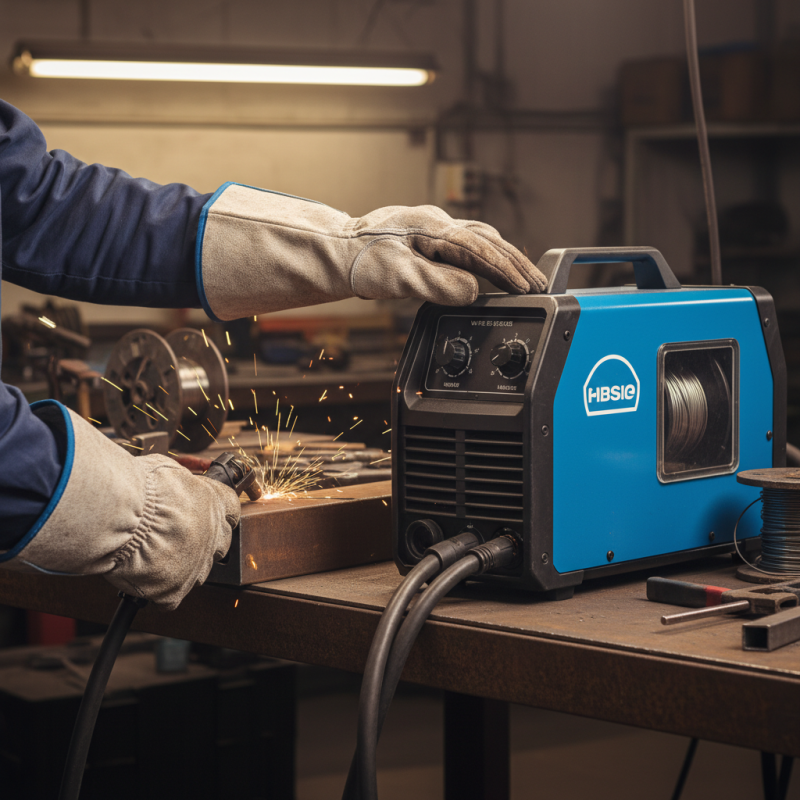
Understanding Different Types of Wire Feed Welders Available
When selecting a wire feed welder, understanding different types is crucial for your needs. The three primary types are MIG, TIG, and Flux-Cored welders. Each type serves distinct purposes and environments.
MIG (Metal Inert Gas) welders are popular for their ease of use. They work well with thin materials, such as sheet metal. Reports indicate that around 70% of welding professionals prefer MIG for its speed and versatility. However, it may not perform well in windy environments due to its reliance on shielding gas.
TIG (Tungsten Inert Gas) welders offer greater control and produce cleaner welds. They are ideal for stainless steel and aluminum. Yet, many beginners find TIG welding challenging. Only 30% of new welders choose this method.
Flux-Cored welders shine in outdoor conditions. They don’t need shielding gas, making them convenient but sometimes messier. Proper training is essential, as the learning curve can be steep. Understanding these types helps you choose wisely based on your specific requirements.
Key Features to Consider When Selecting a Wire Feed Welder
When selecting a wire feed welder, several key features can greatly impact your experience. Consider the power output first. A machine with adjustable settings can handle various material thicknesses. This flexibility is essential for diverse projects.
Next, think about the wire feed speed. An adjustable speed allows for smooth feeding and reduces the risk of jams. It also enhances the quality of your welds.
Portability is another factor. If you plan to move the welder often, look for a lightweight design. A carrying handle can be beneficial. Additionally, check for the duty cycle. A welder with a longer duty cycle can operate longer without overheating. This is crucial for larger tasks, where taking breaks isn't practical.
User-friendliness is key too. A clear interface makes setup easier. But not all welders come with an intuitive design. Some may require you to dig through manuals to understand controls. This could slow you down. Make sure to research and read reviews. Identify what others found confusing or challenging. Being aware of these potential issues can prepare you for better choices.
Assessing Your Welding Projects and Requirements
Assessing your welding projects and requirements is crucial when choosing a wire feed welder. Consider the materials you'll work with. Steel, aluminum, and stainless steel all require different settings and techniques. According to a survey from the American Welding Society, 34% of welders prefer MIG welding for its versatility. However, project specifics can significantly impact your choice.
Evaluate your project size and frequency. A hobbyist may opt for a portable model, while a professional may need a robust machine for heavy-duty tasks. The Welding Equipment Manufacturers Association reports that 45% of industrial users cite power output as a top priority. Understand your power needs before making a purchase, as underestimating this can lead to subpar results. Many users overlook this critical aspect, leading to frustration and wasted materials.
Think about the environments where you'll weld. Outdoor conditions can affect performance, especially with wind. Many welders find their equipment struggles outside. This can result in poor bead quality. It's vital to test your machine in various conditions before settling on it. Reflecting on your specific needs will guide you toward the right choice, minimizing potential challenges.
How to Choose the Best Wire Feed Welder for Your Needs?
This bar chart illustrates the welding material requirements based on different types of materials, their thickness, and the recommended welding speed. Understanding these parameters will help you choose the best wire feed welder for your specific welding projects.
Budget Considerations for Purchasing a Wire Feed Welder
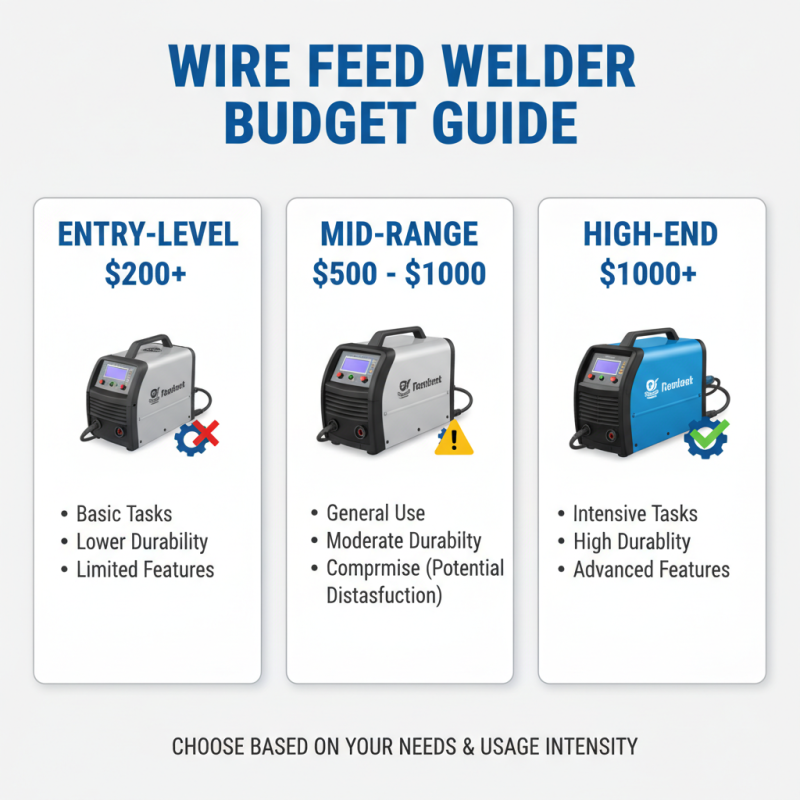
When considering the budget for a wire feed welder, it's essential to understand the cost spectrum. Entry-level models can start as low as $200. However, high-quality machines can cost over $1,000. Many users may opt for budget-friendly options. Yet, lower-priced welders may lack the durability for intensive tasks. A compromise often leads to dissatisfaction.
Cost isn't the only factor. Power requirements are crucial too. For instance, many welders operate on 110V or 220V. The voltage impacts both the initial purchase price and long-term costs. A 220V welder typically offers more power. However, installation costs for the electrical work can add up. Research shows that ignoring these details can lead to extra expenses later. Efficiency plays a vital role as well. A welder with a higher duty cycle may seem pricier upfront but save money over time through reduced downtime.
Many welders also overlook the additional costs of accessories. Safety gear and consumables can accumulate quickly. Depending on usage, these costs can reach hundreds of dollars annually. Investing in quality gear enhances overall safety and efficiency. Yet, some may prioritize price over quality. It can be a risky decision. Balancing immediate costs with long-term benefits is crucial for a wise investment.
Comparing Top Brands and Models in Wire Feed Welding Machines
When selecting a wire feed welder, various aspects matter. Start by evaluating the key features. Some models offer dual voltage options, making them versatile for different tasks. Others have simpler interfaces, which can be easier for beginners. Consider your skill level too. Advanced welders might prefer machines with a wider range of settings to customize their welding experience.
Next, look at the power output of each model. Some warranties clearly highlight power efficiency but may not detail performance under load. This is where user reviews can help. They often reveal how well a welder performs in real-life situations. Pay attention to feedback regarding wire feed speed and consistency. Even minor issues with feeding can lead to frustration during projects.
Also, remember the weight and portability of the welder. Heavy machines can be a hassle to move. Sometimes, the most compact designs sacrifice power, leading to hot and cold spots. Reflect on the projects you will undertake. A machine that excels in one area might not perform well in another. Balancing these elements ensures you get a weld that fits your needs, no matter how challenging the task may be.
How to Choose the Best Wire Feed Welder for Your Needs?
| Model |
Max Output (Amps) |
Weight (lbs) |
Voltage (V) |
Wire Feed Speed (IPM) |
Suitable Applications |
| Model A |
200 |
40 |
120/230 |
50-600 |
MIG Welding, Metal Fabrication |
| Model B |
150 |
35 |
120 |
20-500 |
DIY Projects, Light Welding |
| Model C |
250 |
50 |
230 |
30-600 |
Industrial Use, Heavy Duty |
| Model D |
180 |
37 |
120/230 |
15-400 |
Home Repairs, General Welding |
| Model E |
300 |
60 |
230 |
40-700 |
Automotive, Fabrication |

 WeChat Online Service