Why Electric Welding Is Essential for Modern Manufacturing Needs?
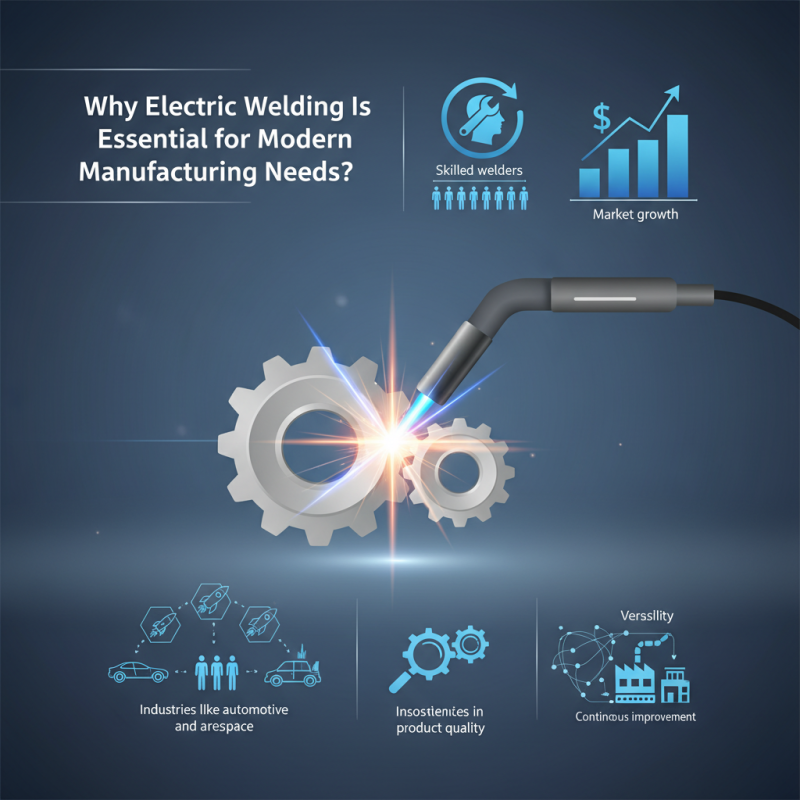
Electric Welding plays a vital role in steering modern manufacturing towards efficiency and precision. According to the American Welding Society, the welding industry is projected to grow significantly, reaching a market value of $30 billion by 2026. This method provides unparalleled strength and durability in joining metals, essential for industries like automotive and aerospace.
Moreover, the demand for skilled welders is on the rise, with a predicted shortage of 375,000 skilled workers in the U.S. by 2023. This gap highlights the need for training and education in electric welding techniques. While electric welding technology has advanced, challenges remain. Not all businesses have adopted the latest methods, which can lead to inconsistencies in product quality.
The versatility of Electric Welding cannot be overstated. From fabrication shops to assembly lines, its applications are vast. However, despite its many benefits, companies must critically assess their welding practices. A commitment to continuous improvement is essential in an evolving market landscape.
The Evolution of Electric Welding in Manufacturing Industries
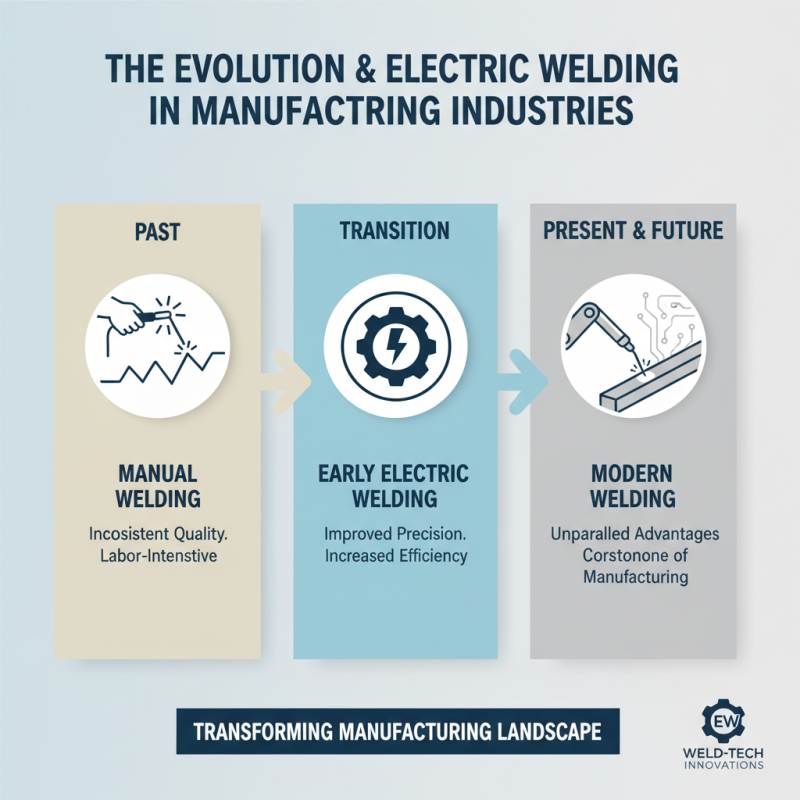
The evolution of electric welding has transformed the manufacturing landscape. Initially, manual welding methods dominated the industry, often leading to inconsistent quality. Over time, the introduction of electric welding revolutionized the process, enhancing precision and efficiency. Today, electric welding is a cornerstone of modern manufacturing, offering unparalleled advantages.
A key development was the rise of MIG welding in the 1940s. This method allowed for cleaner welds and faster production times. Many manufacturers adopted it for various applications, from automotive to aerospace. However, the rapid adoption also revealed challenges, such as skill gaps in the workforce. Training programs began to address these issues, focusing on practical experience and safety.
Tip: Implement regular training sessions for your welding teams. Hands-on practice can significantly improve their skills and confidence in electric welding.
The advancement in technology continues to drive electric welding forward. Automated welding machines now enhance precision and reduce human error. Yet, this brings new questions about job displacement and the need for ongoing education in the field. Companies must find a balance between automation and human expertise.
Tip: Encourage feedback from your welders. Their insights can help identify areas for improvement in both techniques and equipment.
Key Advantages of Electric Welding Over Traditional Welding Methods
Electric welding has become a cornerstone of modern manufacturing. It offers several key advantages over traditional methods. One primary benefit is efficiency. According to industry reports, electric welding can produce welds up to five times faster than gas welding. This speed significantly reduces production time, boosting overall output.
Another advantage is precision. Electric welding provides better control over heat and welding parameters. This results in smaller, more consistent welds. In complex fabrications, this precision is crucial. A study revealed that precision welding reduces post-weld machining needs by 30%. This not only cuts costs but also minimizes material wastage.
Electric welding also enhances safety. Traditional methods can expose operators to harmful gases and fumes. In contrast, electric welding systems often include advanced shielding and ventilation options. This shift not only improves workplace health but also increases operational efficiency. However, it’s essential to continually assess these systems for potential improvements. Embracing innovation can address challenges within existing processes.
Applications of Electric Welding Across Various Manufacturing Sectors
Electric welding plays a critical role in various manufacturing sectors today. Its applications range from automotive to aerospace and construction. According to a recent industry report, over 40% of metal fabrication processes now employ electric welding techniques. This highlights its essential nature in ensuring efficient production and superior quality.
In the automotive sector, electric welding is pivotal for assembling vehicles. It ensures strong and durable joints, which are crucial for safety. Notably, automated electric welding processes enhance speed and precision. Reports show that companies using advanced electric welding technology can reduce production time by up to 25%. However, reliance on automation raises concerns about maintaining traditional craftsmanship skills.
In construction, electric welding is crucial for steel structures. It enables quick assembly of frameworks, leading to faster project completion. Electric welding methods can reduce labor costs by 15% compared to other joining methods. Yet, this shift may lead to a dependence on technology. As projects grow more complex, skilled labor may be needed to manage sophisticated equipment and ensure compliance with safety standards.
Impact of Electric Welding on Production Efficiency and Quality
Electric welding plays a crucial role in modern manufacturing. It enhances production efficiency significantly. The process allows for faster assembly of metal components. This speed can meet increasing market demands. Efficient welds reduce the time needed for repairs. Manufacturers save both time and money.
Quality is another vital factor. Electric welding produces strong, durable joints. These connections withstand high stress. However, achieving consistent quality can be challenging. For instance, varying skill levels among welders may lead to imperfections. Companies need to invest in training to mitigate this issue. Monitoring equipment regularly can also help maintain standards.
Moreover, electric welding promotes innovation. It opens new paths for design and materials. However, it requires careful planning and execution. Balancing speed and quality remains a complex task. Manufacturers must continually adapt to technological advancements. This will ensure they meet both efficiency and quality goals.
Impact of Electric Welding on Production Efficiency and Quality
This chart illustrates the improvement in production efficiency and quality due to the adoption of electric welding technologies in manufacturing processes. The data reflects the percentage increase in efficiency and quality ratings over the past five years.
Future Trends in Electric Welding Technologies and Innovations
Electric welding is rapidly evolving, driven by the needs of modern manufacturing. Innovations in this field focus on
efficiency, precision, and sustainability. One significant trend is the
integration of automation and robotics into electric welding processes. These technologies
enhance speed and accuracy, ensuring consistent quality in welds. Advanced sensors and AI are being utilized to monitor
the welding process in real-time. This allows manufacturers to make adjustments on the fly, significantly reducing
errors.
Another exciting development is the shift towards green welding technologies. With an increasing demand
for eco-friendly practices, manufacturers are exploring welding methods that reduce emissions. Electric arc welding, known for its lower
environmental impact, is gaining popularity. Additionally, research is ongoing in new materials that minimize resource
consumption and waste.
Tip: Regularly maintain your welding equipment. This ensures optimal performance
and safety, reducing the risk of accidents.
The role of electric welding in industry cannot be overstated. Yet, challenges remain. As technology advances, keeping
up with training is essential. Employees must understand new systems to leverage these innovations effectively.
Tip: Invest in training programs for your team. Skilled workers lead to higher quality outputs and safer
work environments.

 WeChat Online Service