How to Fix Stick Welder Sticking Issues Easily?
Stick Welder Sticking issues can greatly impact your welding efficiency. According to industry reports, nearly 30% of welders face this problem during their work. This statistic reveals the frequency of these frustrating situations and underscores the need for effective solutions. The causes of Stick Welder Sticking can vary, including poor technique, improper equipment settings, and inadequate materials.
Understanding the root of the issue is crucial for overcoming it. Expert welders often emphasize that consistent practice and attention to detail can prevent these sticking moments. Reports from welding associations highlight that beginners tend to encounter these challenges more frequently due to a lack of experience. Even seasoned welders may experience setbacks if they neglect their equipment maintenance.
By focusing on practical tips and techniques, professionals can minimize the incidence of Stick Welder Sticking. It’s essential to reflect on past experiences to identify what went wrong. Analyzing mistakes will lead to improved skills and better outcomes in the long run. Embracing a mindset of continual learning is vital in the welding industry, where mastery requires both practice and knowledge.

Identifying Common Causes of Stick Welder Sticking Issues
Stick welders can experience sticking issues, which can hinder productivity. One common cause is improper electrode choice. Electrode materials and coatings play a vital role in performance. According to the American Welding Society, nearly 40% of welders report using the wrong electrodes for their projects. This can lead to excessive sticking and poor arc stability.
Another factor is the setting of the welder. Many operators overlook the amperage settings while welding. A report from the Welding Institute states that 30% of sticking issues stem from incorrect amperage. If the current is too low, the electrode may not reach its melting point. Consequently, this can result in a sticky situation. Adjusting the settings accordingly can improve the arc and reduce sticking.
Welders should also consider their technique. For example, an inconsistent angle or travel speed can negatively impact the weld. The best practice is maintaining a steady hand and an appropriate distance from the workpiece. Operators should reflect on their approach and correct any habits that contribute to sticking. Adapting these methods can significantly enhance welding quality.
Preparing the Workspace for Efficient Stick Welding
Preparing the workspace for efficient stick welding is crucial for success. A well-organized area minimizes distractions. Ensure adequate ventilation to control fumes. According to the American Welding Society, proper ventilation can reduce toxic exposure by up to 75%. This significantly enhances safety and productivity during your work sessions.
Lighting plays a vital role in any welding task. Dim workspaces can lead to mistakes. Bright, adjustable lighting can help achieve precision. Install overhead lights and additional task lights around your welding station. Data shows that effective lighting can improve worker efficiency by 20%.
Keep your tools and materials within reach, but organized. A cluttered workspace can lead to accidents and frustration. Labeling compartments for different rods and tools can save time. One study found that organization can reduce project completion time by 30%. Reflecting on workspace layouts periodically can yield improvements. Aim for efficiency, but stay adaptable to new methods and changes in projects.
How to Fix Stick Welder Sticking Issues Easily? - Preparing the Workspace for Efficient Stick Welding
| Issue |
Symptoms |
Possible Causes |
Solutions |
| Electrode Sticking |
Electrode keeps fusing to the workpiece |
Incorrect amperage settings |
Adjust the amperage to match the electrode size and material |
| Inconsistent Arc |
Fluctuating arc, poor penetration |
Dirt or contamination on the base metal |
Clean the work surface thoroughly before welding |
| Poor Bead Appearance |
Uneven or wavy weld beads |
Wrong electrode angle |
Adjust the angle to a consistent position (15-30 degrees) |
| Overheating |
Burnt or melted electrode |
Excessive amperage |
Lower the current settings |
| Excessive Spatter |
Weld spatters outside the bead |
Improper distance from the workpiece |
Maintain a consistent distance between the electrode and workpiece |
Adjusting Welder Settings to Prevent Sticking
When using a stick welder, adjusting settings can significantly reduce sticking issues. Proper amperage is key to a smooth welding process. If the amperage is too low, the electrode may not melt adequately, leading to sticking. Conversely, if it's too high, it can burn the electrode too quickly. Aim for a balanced setting suitable for your material thickness.
Another essential factor to consider is the type of electrode you use. Different electrodes serve various applications. For example, using a high cellulose electrode in humid conditions may lead to unwanted sticking. Ensure that the electrode matches your project's requirements. This attention to detail can prevent many common issues.
Tips: Always clean the surface before welding. Dirt and rust can disrupt the process, causing the electrode to stick. Regularly inspect your equipment for wear and tear. Dull or damaged tips can affect performance. If you find sticking still occurs, review your technique. Sometimes, it's a matter of adjusting your angle or speed for better results.
Choosing the Right Electrode for Your Welding Task
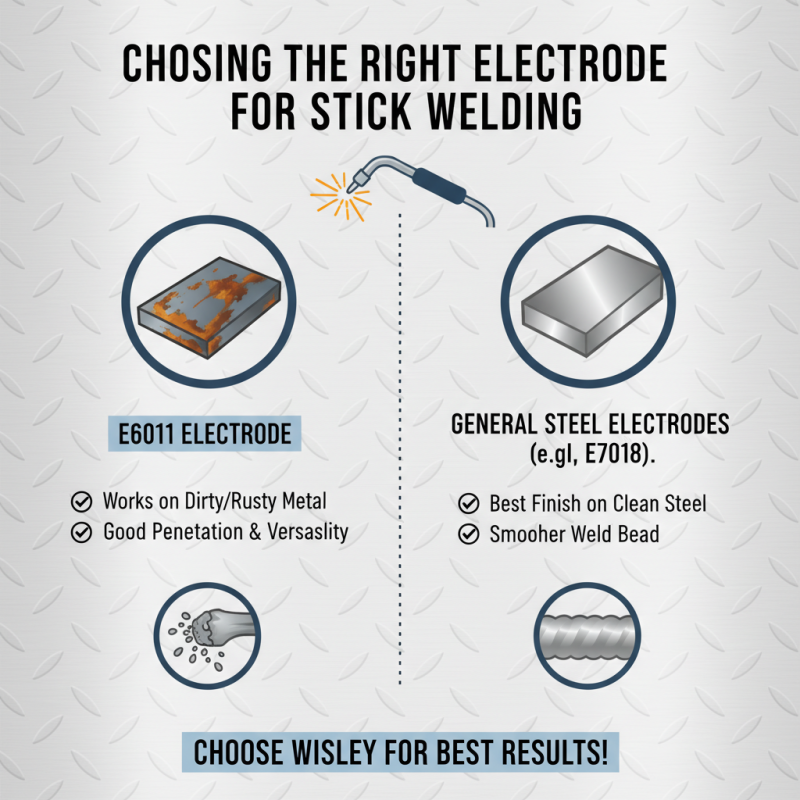
Choosing the right electrode is crucial for effective stick welding. Different electrodes serve different purposes. For example, E6011 electrodes work well on dirty or rusty materials. They offer good penetration and are versatile. However, they might not provide the best finish on clean steel.
For clean metal, E6013 is often recommended. It produces a smoother weld and is easier to use for beginners. Still, it may struggle with thicker materials. The choice of electrode impacts the overall quality of the weld. Incorrect selection can lead to sticking issues or poor bead appearance.
Welders often learn through experience. Sometimes, they choose electrodes based on habit rather than the task at hand. This can lead to frustrations during projects. A welder may have difficulty producing a sound weld if the electrode does not match the material. Reflecting on previous jobs can help in making better choices. Understanding these subtleties enhances skills.
Techniques for Improving Arc Stability and Reducing Sticking
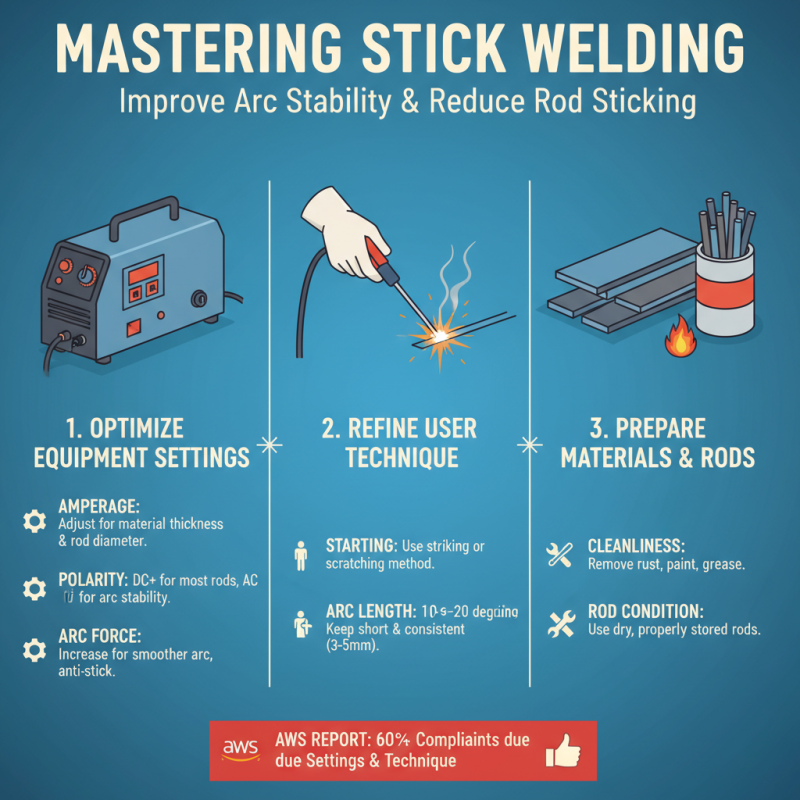
Stick welding can often lead to issues with rod sticking, impacting efficiency and quality. To improve arc stability and reduce sticking, certain techniques can be fundamental. According to a recent report from the American Welding Society, improper settings and user technique contribute to over 60% of welder complaints. Understanding and adjusting your equipment is essential.
One vital technique is adjusting the amperage. Many welders tend to use too high a setting, causing the electrode to melt too quickly. When the rod sticks, it’s often due to an improper heat level. Aim for a balanced amperage based on electrode diameter. A good target is approximately 80-90 amps for a 1/8 inch electrode.
Tips for stability include maintaining a consistent travel speed. Slow and steady movements help maintain an even arc. Additionally, ensure a clean work surface. Contaminants can lead to inconsistent arc behavior. A diligent approach can make a significant difference. Consider your technique; many welders neglect the angle of the electrode. Keep it at about a 15-degree angle for more control.
Reflection on personal techniques can reveal areas for improvement. Even seasoned welders are not immune to inconsistency. Regular practice and adjustments can transform your stick welding experience. Embrace the process of learning; it's crucial for achieving optimal results.

 WeChat Online Service