How to Choose the Best Inverter Welder?
Choosing the best Inverter Welder is not simply a matter of finding the highest amperage or lowest price. A reliable choice depends on your metal type, welding process, duty cycle, power supply, and daily workload. A compact workshop unit may handle steel brackets beautifully, yet struggle with thick plate after several long welds. That difference matters.
Welding engineer Duane K. Miller has said, “Welding is not a black art; it is a science.” His statement reflects an important buying principle. The machine should match measurable requirements, not attractive advertising. Check its actual output, duty cycle, voltage range, electrode compatibility, and protection features. For example, a 200-amp Inverter Welder may be suitable for home repairs, stainless-steel projects, and moderate fabrication. However, it may not be the right tool for continuous industrial production.
Look closely at real working conditions. Will you weld beside a workbench, outdoors, or on a construction site? A lightweight model is easier to carry, but internal components and cooling design still deserve attention. Stable arc control can make a visible difference when welding thin sheet, especially near a sharp corner. Safety certification, thermal protection, warranty support, and replacement parts also influence long-term reliability.
Some specifications can mislead.
Even experienced users sometimes choose too much power and too little durability. I have found that practical testing often reveals weaknesses hidden by impressive labels. This guide examines the details that make an Inverter Welder dependable, efficient, and appropriate for your actual welding work.
Understanding Inverter Welder Types and Core Operating Principles
How to Choose the Best Inverter Welder?
Understanding Inverter Welder Types and Core Operating Principles
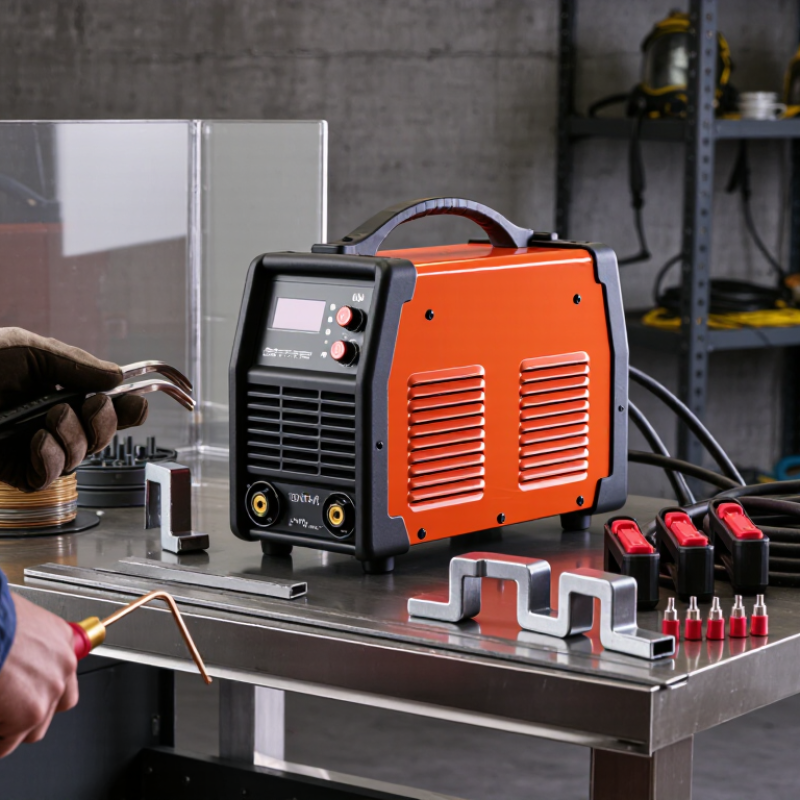
An inverter welder changes incoming electrical power through several controlled stages. It first rectifies AC into DC. High-frequency switches then reshape that power. A smaller transformer adjusts the voltage and current. Finally, another rectifier supplies a stable welding arc. This design reduces weight and improves control compared with traditional transformer welders.
Different inverter welders suit different work. Stick welders handle outdoor repairs and rusty steel with coated electrodes. TIG welders create clean, precise joints on stainless steel and thin metals. MIG welders feed solid wire continuously, making them practical for workshop production. Some multi-process models combine these functions, but convenience can hide compromises. Check each process separately.
I once selected a compact machine by its maximum amperage alone. That was a poor choice. It overheated during repeated joints because its duty cycle was too low. Look for rated output, duty cycle, input voltage, arc-start behavior, and thermal protection. A 200-amp label means little without operating time. For example, a 60% duty cycle at 200 amps allows six minutes of welding within ten minutes. Cable length and electrode compatibility also affect real performance. Read the technical manual, not only the front-panel numbers. Your work area matters. A dusty site, long extension cable, or weak power supply may expose limits that showroom tests never reveal.
Matching Welding Processes, Materials, and Project Requirements
Choosing an inverter welder starts with the joint, not the machine’s advertised amperage. For clean steel repairs, shielded metal arc welding offers portability and tolerates outdoor airflow. Gas metal arc welding suits longer seams and production work, but it needs stable shielding gas. Gas tungsten arc welding delivers precise control on stainless steel and aluminum, especially around thin edges. It is slower. That matters.
Material thickness should guide the output range. A 3 mm steel bracket may need far less current than a 12 mm structural plate. Check the duty cycle at your expected amperage, not only the maximum rating. The International Organization for Standardization lists welding processes under ISO 4063, helping users compare process requirements consistently. For aluminum, choose a machine with suitable alternating-current capability when tungsten arc welding is required. For site repairs, direct-current stick welding may be more practical.
Project conditions also change the right choice. A small workshop may value low input power and a compact case. A fabrication crew may need repeatable arc starts, thermal protection, and a higher duty cycle. The U.S. Bureau of Labor Statistics projects roughly 45,000 annual openings for welding-related occupations through 2033, showing why efficient, usable equipment matters. Still, I would not choose solely by labor-saving features. Training, ventilation, cable length, and operator comfort often decide real productivity. I have seen impressive specifications fail when the machine was poorly matched to the material. Check the weld procedure, input supply, electrode or wire type, and actual working environment before buying.
Comparing Power Ratings, Duty Cycles, and Welding Performance
How to Choose the Best Inverter Welder?
Power ratings should match your actual work, not the largest number on a label. A 200-amp inverter may weld 6 mm steel effectively, but only with suitable electrodes, voltage, and technique. Input power matters too. At 230 volts and 30 amps, the welder may require about 6.9 kVA before efficiency losses. Check your circuit first. The International Electrotechnical Commission’s IEC 60974-1 standard measures duty cycle over ten minutes at 40°C. Therefore, a 60% duty cycle means six minutes of welding and four minutes of cooling. It is not continuous output. Small workshops often overlook this detail.
Welding performance depends on arc stability, current adjustment, and recovery after voltage changes. A stable arc produces fewer spatter marks and reduces grinding time. Higher amperage is not automatically better. For thin sheet, excessive current can create burn-through within seconds. For structural work, poor penetration can remain hidden beneath a neat surface. In practical testing, weld a short bead, inspect its profile, and record the machine’s temperature. I once trusted the rating alone. That was a costly assumption.
Tips: Compare duty-cycle figures at your target amperage. Read the manual’s input-current requirements. Leave thermal protection engaged. The American Welding Society advises matching electrodes, polarity, and procedure controls to the application. Also, allow extra capacity for cold starts and long cables. A lower-rated machine with consistent output may outperform a stronger unit that overheats.
How to Choose the Best Inverter Welder? - Comparing Power Ratings, Duty Cycles, and Welding Performance
| Welder Class |
Typical Input Supply |
Rated Output Range |
Maximum Output |
Duty Cycle at 40°C |
Typical Input Power |
Recommended Electrode Size |
Suitable Material Thickness |
Best-Suited Welding Work |
Performance Considerations |
| Compact Maintenance |
120 V AC, single-phase |
20–90 A |
100 A |
20% at 90 A |
1.8–2.4 kW |
1.6–2.5 mm |
1.5–4 mm |
Light repairs, thin steel, hobby projects |
Portable and suitable for ordinary household circuits; limited capacity for long welds and large electrodes. |
| Portable General-Purpose |
230 V AC, single-phase |
30–130 A |
140 A |
30% at 130 A |
3.0–4.0 kW |
2.0–3.2 mm |
2–8 mm |
Farm maintenance, brackets, gates, and general fabrication |
Good balance of portability and arc stability; commonly suited to intermittent repair work. |
| Workshop MMA Welder |
230 V AC, single-phase |
30–160 A |
180 A |
35% at 160 A |
4.0–5.5 kW |
2.5–4.0 mm |
3–12 mm |
Structural components, equipment repair, and medium fabrication |
Provides stronger penetration and better performance with 3.2 mm electrodes; input circuit capacity should be checked. |
| Heavy-Duty Fabrication |
230 V AC, single-phase |
40–200 A |
220 A |
40% at 200 A |
5.5–7.0 kW |
3.2–5.0 mm |
5–16 mm |
Longer welds, heavy repair, and thick carbon-steel sections |
Higher thermal capacity supports larger electrodes, but maximum output may require a dedicated high-current circuit. |
| Three-Phase Production |
400 V AC, three-phase |
40–250 A |
300 A |
60% at 250 A |
8.0–12.0 kW |
3.2–5.0 mm |
6–25 mm |
Production welding, heavy frames, and repeated structural joints |
Best heat management and arc consistency for demanding workloads; requires suitable industrial power infrastructure. |
Selection guide: Choose a welder whose normal working current falls comfortably below its maximum rating. Duty-cycle figures indicate the percentage of a standard 10-minute period that the machine can weld at the stated current before cooling is required. Actual capacity depends on electrode type, ambient temperature, cable length, input voltage, and the manufacturer’s test standard.
Choosing a Reliable Inverter Welder Within Your Budget
Choosing a reliable inverter welder starts with matching its output to your actual work. A compact 160-amp unit may handle household repairs, brackets, and light steel. Thicker frames need more reserve, not just an impressive maximum number. Check the duty cycle at the amperage you will use. A machine rated at 60% duty cycle can weld for six minutes during a ten-minute period. That pause matters. It becomes important when a joint runs across a long frame. I once bought for peak amperage and ignored duty cycle. The extra power did not help; the repeated pauses did.
Compare total ownership cost, not only the shelf price. Include suitable electrodes or wire, a proper ground clamp, leads, protective equipment, and possible repairs. A cheap unit becomes less attractive when its cables heat up or its controls feel vague. Look for clear specifications, overload protection, stable arc control, and accessible service information. Input voltage deserves attention. Some welders need a dedicated circuit, which can add installation expense. For occasional work, paying for features you cannot adjust may waste money. For regular fabrication, better control can reduce spatter, grinding, and wasted metal.
Buy from a seller that provides a traceable warranty and readable safety documentation. User manuals should state compatible processes, cable limits, and ventilation requirements. Independent reviews are useful, but real weld samples reveal more than star ratings. Inspect bead width, penetration, and arc stability on scrap steel before trusting a new machine. My judgment can be wrong when metal preparation is poor. Clean steel and correct settings matter as much as the welder itself.
 WeChat Online Service