What is a Tig Machine and How Does it Work?
A Tig Machine, widely recognized in welding, plays a crucial role in various industries. This advanced equipment utilizes tungsten inert gas for precision welding. Many professionals rely on its capabilities for projects requiring high-quality results.
Understanding how a Tig Machine functions is essential for both novices and experienced welders. Its design features a non-consumable electrode that creates an arc, melting the metal. The inert gas protects the weld pool from contamination, ensuring optimal weld integrity. However, mastering the Tig technique can be challenging, requiring practice and skill.
Working with a Tig Machine often brings challenges that push users to improve. The focus on control and technique creates room for mistakes and learning. Understanding these variables is key in developing proficiency. With dedication, mastery of a Tig Machine can lead to quality results that meet industry standards.
What is a TIG Machine?
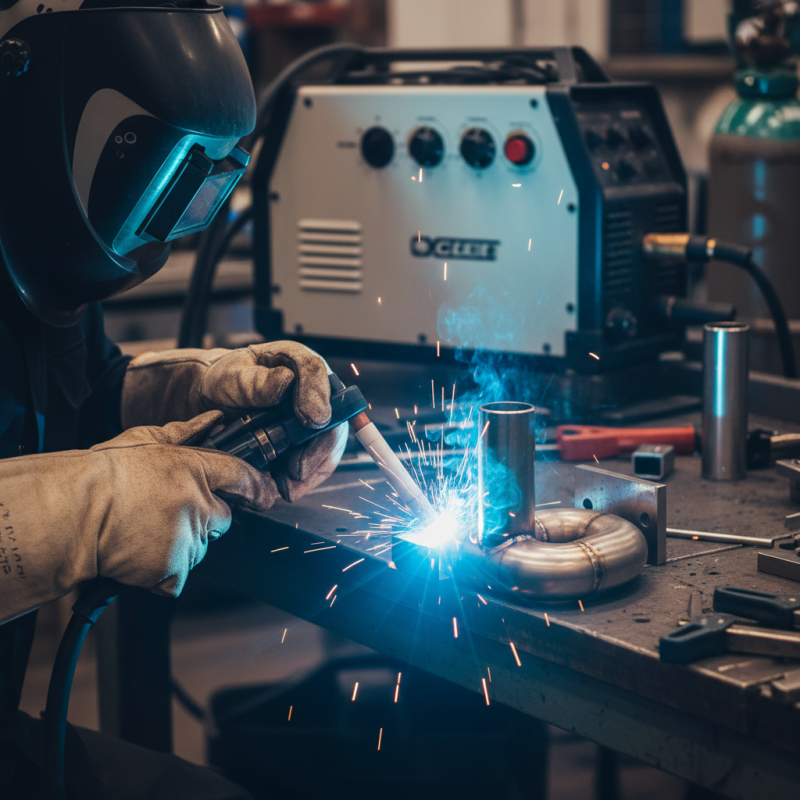
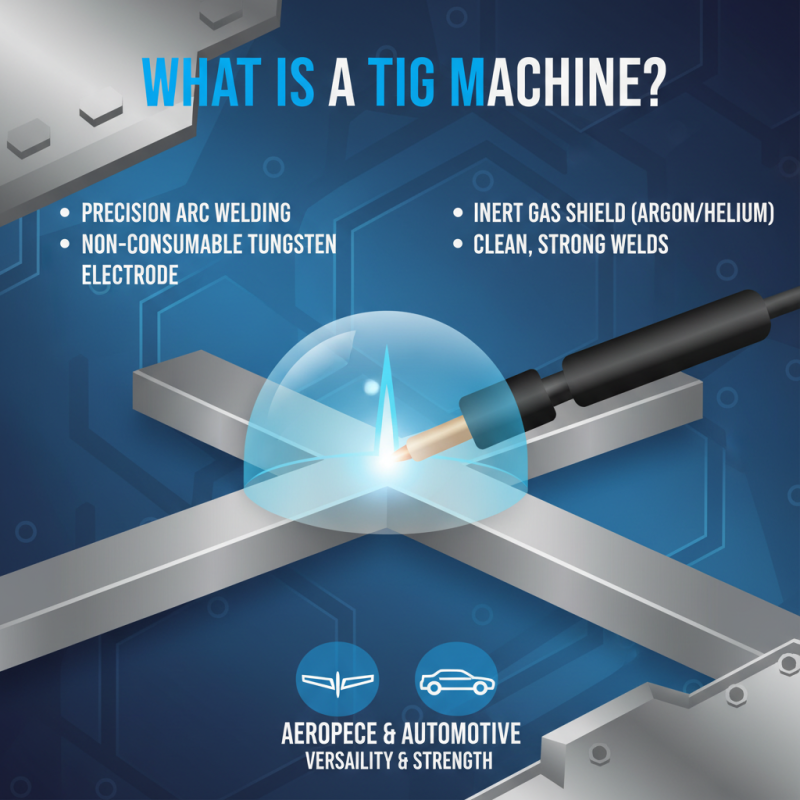
A TIG machine, or tungsten inert gas welder, is a pivotal tool in modern metalworking. It creates a precise arc between a non-consumable tungsten electrode and the workpiece. This setup allows for exceptional control, particularly when joining thin materials. The inert gas shield protects the weld pool from atmospheric contamination. This results in cleaner, stronger welds. TIG welding is popular in industries ranging from aerospace to automotive due to its versatility and strength.
Tips for using a TIG machine: Ensure the correct electrode size and type is used for the material. A mismatch can lead to issues during welding. Additionally, always maintain a steady hand and manageable travel speed to achieve a smooth bead. Another common mistake is not cleaning the metal before welding. Dirt and oxidation can compromise the integrity of the weld.
It’s crucial to be mindful of your gas flow rate. An improper setting can result in either too much gas, which wastes supplies, or too little, which leads to defects. Practice makes perfect, so work on scrap materials before tackling critical projects. Embrace small setbacks as learning opportunities. Reflecting on these challenges can lead to improved technique and better results in the future.
The History of TIG Welding Technology
TIG welding, or Tungsten Inert Gas welding, has a rich history that dates back to the 1940s. Initially developed for aircraft and aerospace applications, it was a response to the need for strength and precision in welds. The process used a non-consumable tungsten electrode and inert gas to protect the weld pool from contamination. This innovation significantly improved weld quality, making it a favorite among metalworkers.
By the 1950s, TIG welding techniques evolved, making them more accessible for general welding applications. Reports indicate that around 30% of all welding processes today employ TIG technology, thanks to its versatility. It can weld metals like aluminum, stainless steel, and copper alloys, catering to diverse industries. However, despite its advantages, TIG welding has drawbacks, such as slower operation and a steeper learning curve compared to MIG welding.
As technology progressed, advancements in power source capabilities and control mechanisms emerged. Modern TIG machines are more efficient, with some capable of pulse welding. Yet, the complexity of setup and the requirement for high skill levels can deter beginners. The balance between quality and accessibility remains a challenge in the widespread use of TIG welding technology.
How a TIG Machine Works: Key Components Explained
A TIG machine, or Tungsten Inert Gas welder, utilizes a non-consumable tungsten electrode to produce a weld. This precision welding technique is widely used across various industries, including aerospace and automotive. According to industry reports, TIG welding accounts for approximately 20% of welding applications due to its ability to create high-quality welds on thin materials.
Key components of a TIG machine include the power supply, tungsten electrode, and shielding gas. The power supply provides a consistent electric current, essential for stable arcs during welding. The tungsten electrode, typically pure or alloyed, resists melting and maintains a focused arc. Shielding gas, usually argon or a mix, protects the weld pool from contamination. It's noteworthy that the choice of gas impacts weld quality significantly, as improper shielding can lead to defects.
Despite its advantages, TIG welding requires a certain level of skill. Many welders find it challenging to master the technique. Factors like heat input and travel speed must be carefully controlled. Inadequate control can result in weak joints or excessive burn-through. Continuous practice and assessment of results are vital for improvement, emphasizing the need for ongoing education in this specialized field.
Applications of TIG Welding in Various Industries
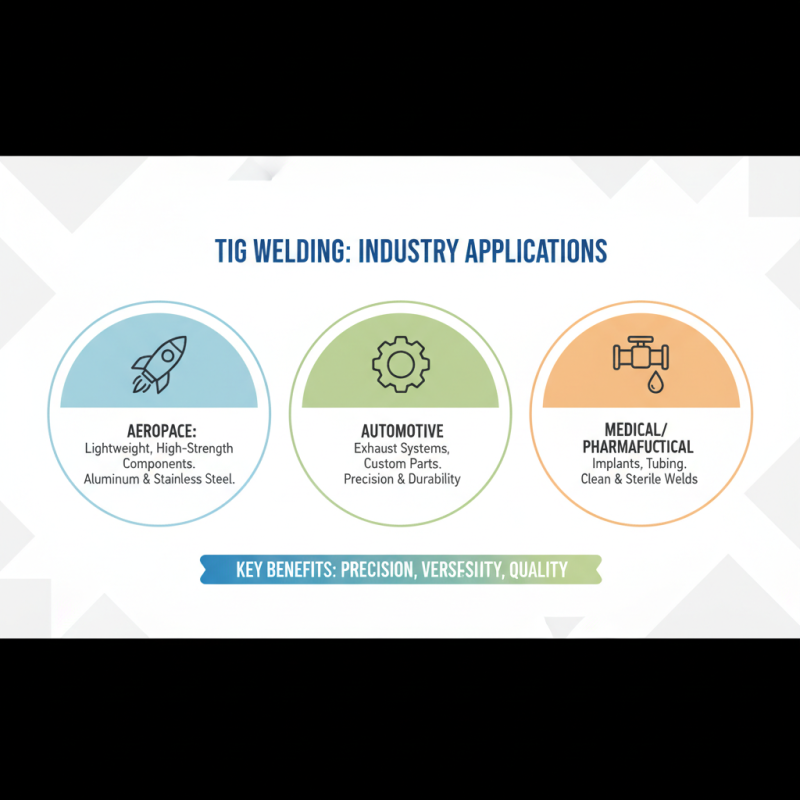
TIG welding, also known as tungsten inert gas welding, offers precise control over the welding process. It is employed in various industries due to its versatility. In the aerospace sector, TIG welding is crucial for crafting lightweight yet strong components. It allows for clean, high-quality welds that meet strict safety standards. The ability to weld different materials, including aluminum and stainless steel, makes it an ideal choice for this industry.
In the automotive field, manufacturers utilize TIG welding for exhaust systems and chassis components. The welds must be both durable and corrosion-resistant. The precision of TIG welding ensures that even intricate designs can be achieved. This precision is often necessary for high-performance vehicles. However, the process can be time-consuming and may require advanced skills.
The energy sector also benefits from TIG welding, especially in constructing energy pipelines. These pipelines must withstand extreme conditions. TIG welding offers the reliability and strength required for such applications. However, some operators face challenges with heat control. Too much heat can warp materials. Learning to balance heat and feed is crucial for success. Each project can be a learning experience.
Advantages and Limitations of Using a TIG Machine
TIG (Tungsten Inert Gas) welding offers distinct advantages and limitations. One major advantage is its
precision. TIG welding provides a clean and strong weld. This is crucial in industries like aerospace,
where weak welds can lead to catastrophic failures. According to a study from the American Welding Society, over 40% of weld failures
are due to inadequate techniques or equipment.
However, TIG welding has its limitations. It requires a higher skill level compared to other methods. Operators need to master the balance of heat input and filler material.
Inadequate training can lead to poor weld quality and wasted materials. The same report indicates that 30% of beginners
experience issues that stem from insufficient knowledge or experience.
Additionally, the equipment setup for TIG welding can be complex. It needs a continuous supply of argon gas and specialized electrodes. These factors can increase operational costs.
A mechanical failure during a TIG welding operation can also lead to significant downtime. Thus, while the precision of TIG welding is appealing, the learning curve and initial
investment can be quite steep, necessitating careful planning and consideration.
 WeChat Online Service