Top Tips for Choosing the Best Welder Equipment for Your Needs
Choosing the right welder equipment can significantly impact your work quality. Expert welder and instructor, John Smith, emphasizes, "The best welder equipment ensures precision and efficiency." When selecting equipment, consider your specific needs and skill level.
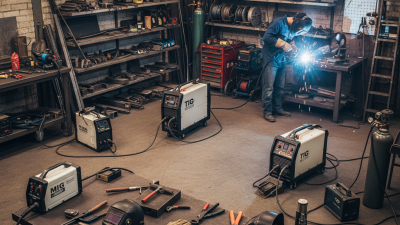
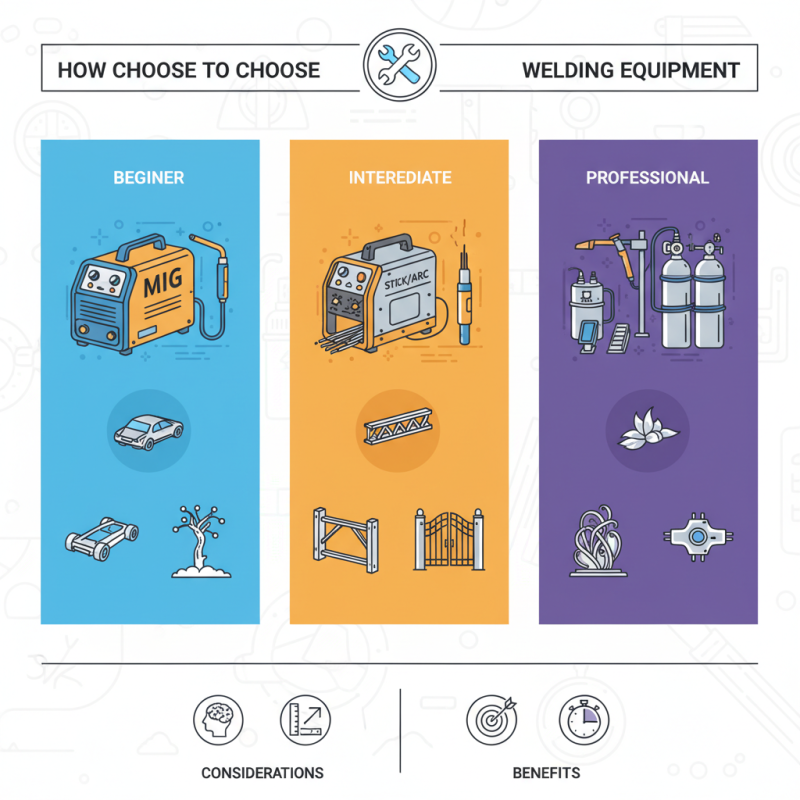
Welding is not a one-size-fits-all. Different projects demand different tools. A beginner may need a simple MIG welder, while an experienced professional might require advanced TIG welding equipment. This diversity makes the selection process both exciting and overwhelming.
Many buyers overlook essential features, leading to frustrating results. It's vital to assess what you truly need before making any purchase. Don't rush into buying the latest model just because it’s popular. Take your time to understand the specifications and what they mean for your projects. Remember, good welder equipment should not only meet your current requirements but also adapt as you grow in skill and expertise.
Understanding Your Welding Needs and Applications
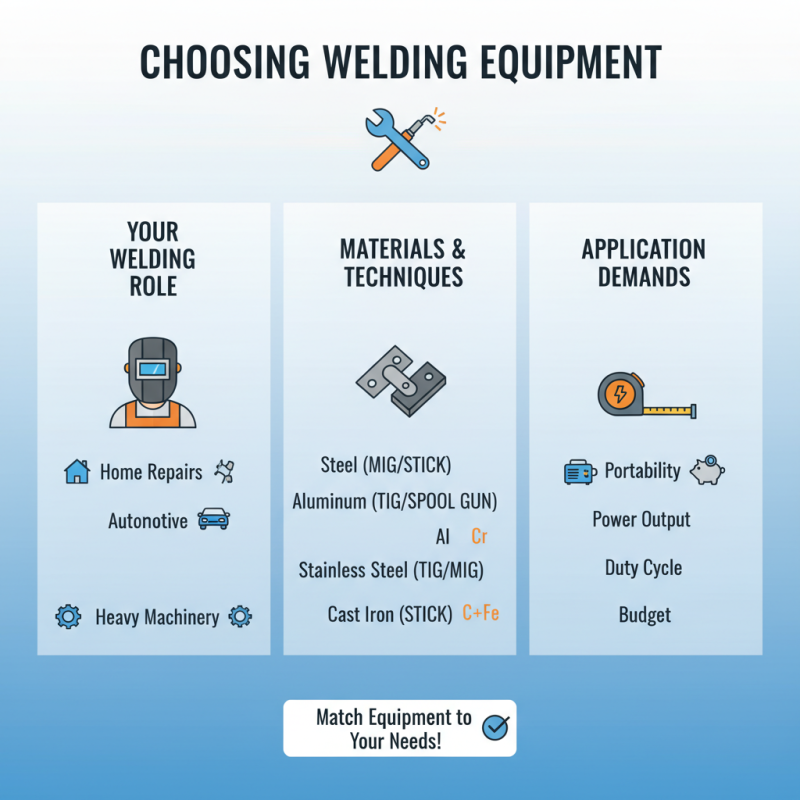
Choosing the right welding equipment depends on your specific needs and applications. Understanding what you will be welding is crucial. For instance, different materials require different techniques. Steel may need a different approach compared to aluminum. Consider whether you’ll be working on home repairs, automotive projects, or heavy machinery. The demands of each application vary greatly.
One of the tips is to assess the thickness of the materials. Thicker materials require more powerful equipment. A high amperage range is necessary for such tasks. Alternatively, if you're welding thin sheets, a lower range is more appropriate. Think about the environment too. Will you be indoors or outdoors? Wind can affect your welding process, especially with MIG and TIG welding.
Another point to ponder is your skill level. Beginners might find a simpler machine more manageable. Complex equipment can be daunting and may lead to mistakes. Reflect on your comfort level with welding techniques. Sometimes, a basic setup is both effective and less overwhelming. As you gain experience, you can upgrade your equipment to handle more challenging projects.
Types of Welding Processes and Their Equipment Requirements
When choosing welding equipment, understanding the types of welding processes is crucial. Each process requires specific tools and gear. For instance, MIG welding uses a continuous wire feed. This method requires a MIG welder and a 75/25 argon/CO2 gas mixture. According to industry data, MIG welding accounts for about 50% of all welding processes in the United States. This popularity is due to its versatility and ease of use.
TIG welding, on the other hand, demands a different setup. It requires a TIG welder along with pure argon gas. The precision involved in TIG welding makes it ideal for thin materials. The American Welding Society indicates that approximately 18% of welders prefer this technique for its ability to create high-quality welds. However, mastering TIG welding takes time and practice, leaving some beginners frustrated.
Stick welding, or SMAW, is another common process. This method uses a consumable electrode coated in flux. It's highly portable, making it suitable for outdoor jobs. Despite its advantages, it can produce slag, requiring extra cleanup time. Understanding these nuances can help in selecting the right equipment, ensuring efficiency and effectiveness in your welding projects.
Key Factors to Consider When Selecting Welder Equipment
When selecting welder equipment, a few key factors play a vital role. Start with assessing the type of welding you will do. Different techniques require specific tools. For instance, MIG welding is great for beginners, while TIG welding offers precision. Understanding these differences shapes your choice.
Budget is another crucial consideration. Good equipment doesn’t have to break the bank, but cutting corners can lead to dissatisfaction. Select equipment that meets your needs without overspending. Sometimes, less expensive options come with hidden costs in quality.
Safety features must not be overlooked. Proper protective gear and equipment safeguards your well-being. Check for ratings and reviews of safety in any welder you consider. Reflect on these aspects carefully. The right choice can elevate your craftsmanship, while the wrong one can lead to frustration and risks.
Top Tips for Choosing the Best Welder Equipment for Your Needs
Evaluating Safety Features and Ergonomics in Welding Gear
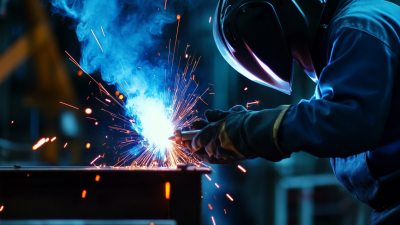
When selecting welding equipment, safety features are crucial. According to a report by the American National Standards Institute (ANSI), around 50% of welding injuries are preventable with proper gear. Look for helmets with auto-darkening filters. These allow for better visibility and reduce eye strain. A helmet that fits well also enhances safety. If it’s too loose, it might shift during use.
Ergonomics should not be overlooked either. Welders often face physical strain. The Bureau of Labor Statistics found that musculoskeletal disorders are common among welders. Equipment with adjustable settings can reduce physical stress. For instance, a welding torch with a comfortable grip will minimize hand fatigue. Furthermore, ensure that the weight of your equipment is manageable. Heavy gear can lead to exhaustion over time.
Many welders do not prioritize these aspects. They may focus solely on performance. However, neglecting safety and ergonomics can have serious consequences. There are reports that workers prioritize cost over comfort. This mindset often leads to long-term health issues. Therefore, investing in well-designed gear is not just a matter of preference. It’s essential for well-being.
Top Tips for Choosing the Best Welder Equipment for Your Needs - Evaluating Safety Features and Ergonomics in Welding Gear
| Feature |
Description |
Importance |
| Safety Rating |
Ensure equipment meets industry safety standards to protect users from hazards. |
Critical |
| Ergonomic Design |
Look for tools that minimize strain during use, such as padded handles and adjustable settings. |
Important |
| Weight |
Choose a lightweight model for better maneuverability and less fatigue. |
Moderate |
| Visibility |
Ensure the welding helmet offers a good field of view and clear lens options. |
Critical |
| Adjustability |
Consider equipment that allows customizable settings for different projects. |
Important |
| Cooling Features |
Look for models with ventilation to reduce heat build-up during prolonged use. |
Important |
| Warranty |
Select equipment with a solid warranty to ensure durability and protection against defects. |
Moderate |
Budgeting for Your Welder Equipment Purchase and Maintenance Costs
When budgeting for welder equipment, it’s essential to think long term. Initial costs can be deceptive. While a cheaper welder might save you money upfront, consider maintenance and operational costs. These can add up quickly. Fuel, spare parts, and consumables all contribute to your total expenses.
It's also crucial to account for repairs. Equipment breakdowns are inevitable. Finding a local technician can be a hassle. Take the time to research service options when choosing your welder. Waiting days for repairs can halt projects and create delays.
Don't forget safety gear and training. Skimping on these can lead to injuries. Medical bills can dwarf your equipment costs. Invest wisely in safety from the start. It might seem like an added expense, but it pays off in the long run. Balancing your budget means considering these factors thoroughly.
 WeChat Online Service