Leave Your Message

Top 10 Stainless Steel Welding Techniques for Global Buyers?

Stainless Steel Welding is a crucial process in various industries, including construction, automotive, and aerospace. According to the International Institute of Welding, the global stainless steel market is expected to grow by 6% annually through 2027. This growth correlates directly with advancements in welding techniques, which enhance product durability and reliability.

Many manufacturers recognize the importance of adopting the best welding techniques. For instance, using gas tungsten arc welding (GTAW) offers precision and high-quality results. However, it requires skilled professionals and can be costly. On the other hand, shielded metal arc welding (SMAW) is more accessible but can lead to inconsistent results if not executed properly.

The landscape of stainless steel welding is continually evolving, driven by technological innovations and increasing demand. Buyers need to stay informed about the latest techniques to make effective purchasing decisions. Awareness of each method's strengths and weaknesses is vital, as choosing the wrong technique can lead to costly mistakes and project delays. Understanding these aspects can significantly impact the quality of the final product.
Top 10 Stainless Steel Welding Techniques for Global Buyers?

Understanding Stainless Steel Welding: Key Techniques and Applications

When it comes to stainless steel welding, understanding key techniques is crucial for global buyers. There are several methods, each suited for different applications. Common techniques include TIG, MIG, and stick welding. These methods offer distinct advantages depending on the project's requirements. For instance, TIG welding provides excellent control and is ideal for thin materials. Meanwhile, MIG welding is highly efficient for larger projects.

A report by the International Stainless Steel Forum states that stainless steel usage has increased by 7% globally in the last year. This growth emphasizes the demand for reliable welding techniques. Buyers should be aware that proper technique choice can directly affect the quality and durability of the final product. Consider the environment where the welding will occur. Factors like humidity and contamination can impact the fusion.

Tip: Always conduct a thorough surface preparation. This step minimizes defects in the weld.

Another essential aspect is the selection of filler materials. Different grades of stainless steel require specific fillers to ensure proper bonding. Misalignment in materials can lead to unexpected failures. Quality control during the welding process is vital. Regular inspections can help identify issues early on.

Tip: Utilize non-destructive testing methods to ensure weld integrity.
Preparation and Setup for Successful Stainless Steel Welding Projects

Top 10 Stainless Steel Welding Techniques for Global Buyers?

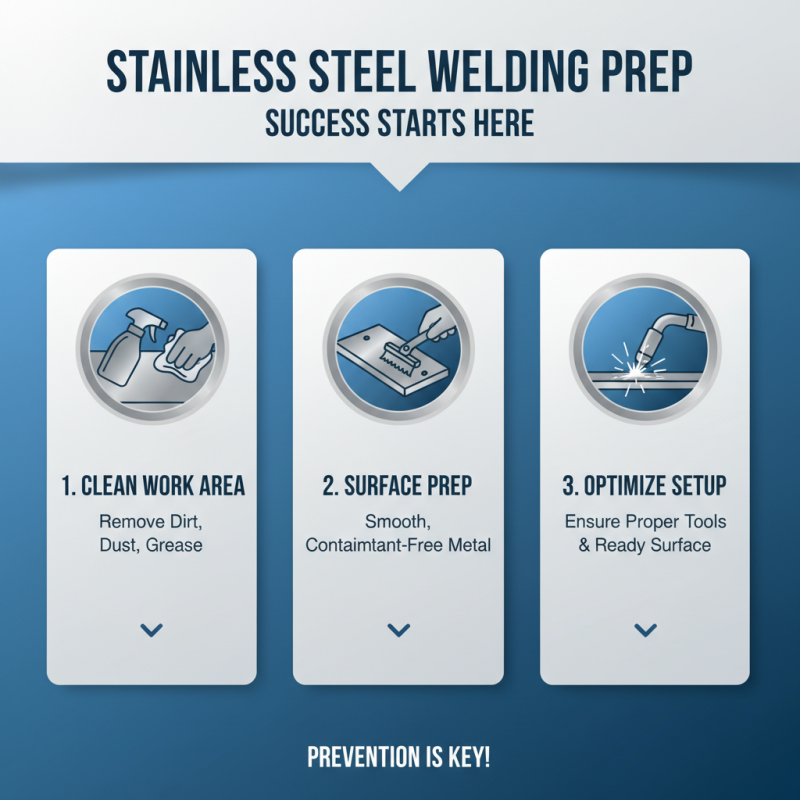
Preparation is key in stainless steel welding projects. Proper setup can significantly impact the outcome. Cleaning the work area is essential. Remove dirt, dust, and grease to prevent contamination. Use appropriate tools for cleaning to ensure a smooth surface. This step cannot be overlooked.

Selecting the right protective gear is also important. Proper gloves and a welding mask can protect against sparks and harmful emissions. The environment should be well-ventilated. Fumes generated during welding can be hazardous. Evaluating the workspace for safety is crucial. Identify potential hazards and address them early.

Consider the type of welding method you will use. Each method has specific requirements for setup. Ensure you have the right equipment ready. Adjust settings to match the thickness of the stainless steel. It's vital to be adaptable and ready to troubleshoot issues. Preparation is not just about equipment; it’s also about mindset. Planning for unexpected challenges will lead to more successful outcomes.

Common Welding Techniques: TIG, MIG, Stick, and Their Unique Benefits

Top 10 Stainless Steel Welding Techniques for Global Buyers?

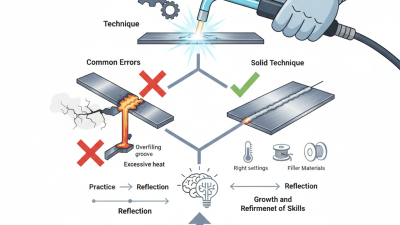
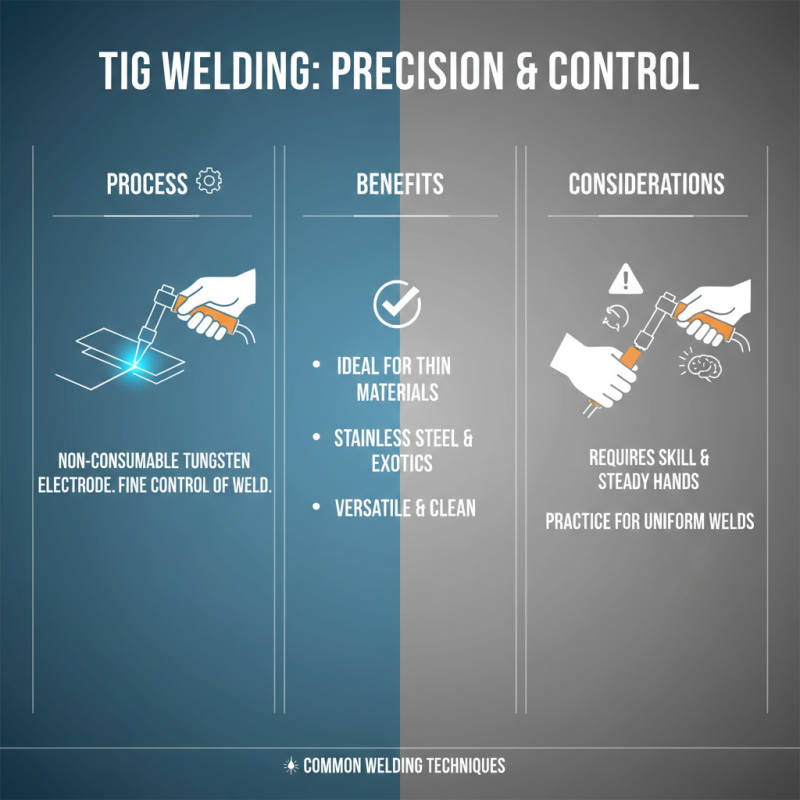
TIG welding is highly regarded for its precision. This process uses a non-consumable tungsten electrode, allowing for fine control over the weld. It’s ideal for thin materials, especially stainless steel. Many welders appreciate its versatility. However, it requires skill and steady hands. Novices may need considerable practice to achieve smooth, uniform welds.

MIG welding, on the other hand, offers speed and efficiency. It utilizes a continuous wire feed, which makes it faster than TIG. This technique is perfect for larger projects where time is critical. However, it may struggle with thinner materials. The right settings and technique are essential for best results. Some welders find it challenging to adjust to varying metal thicknesses.

Stick welding is a more traditional approach. It is less sensitive to contamination and can be performed outdoors. This method is effective on rusty or dirty surfaces. However, it produces more slag and requires clean-up afterwards. Additionally, beginners might face difficulties with electrode angles and travel speeds, leading to inconsistent welds. Each technique has its pros and cons, allowing welders to choose based on project requirements.

Quality Control Measures in Stainless Steel Welding Processes

Quality control in stainless steel welding is crucial for ensuring strong and durable joints. Welders must inspect the material regularly. This includes checking for defects in both the base metal and filler material. Proper surface preparation is also vital. Any contamination can compromise the integrity of the weld.

During the welding process, visual inspections are necessary. Welds should appear uniform and free of cracks. Welders often use tools like gauges to measure weld size and penetration. This attention to detail can make a significant difference in the overall strength of the joint. A small oversight could lead to major issues later.

Testing methods serve as an additional layer of quality control. Non-destructive testing, such as ultrasonic or radiographic methods, identifies hidden flaws. These techniques can help prevent failures in critical applications. Regular audits can highlight areas needing improvement. Continuous learning and adaptation are key. Emphasizing quality not only ensures better products but also boosts consumer trust.

Best Practices for Selecting Equipment and Materials in Welding Projects

Selecting the right equipment and materials for stainless steel welding is crucial for project success. Quality and compatibility directly affect weld integrity and durability. Global buyers must consider specific techniques suitable for their application. Understanding the properties of stainless steel can inform equipment choices.

Tips for selecting materials: Always check the grade of stainless steel. Different grades respond uniquely to heat and filler gases. For welding, 304 and 316 are popular choices due to their corrosion resistance. Keep an eye on the thickness of the metal; this dictates the required power settings.

Choosing the right welding machine is equally important. Consider power output and portability. A machine with higher amperage is ideal for thicker materials. However, it may be unnecessarily bulky for smaller projects.

Focus on shielding gas selection too. Argon is typically preferred for its inert properties. It prevents oxidation and ensures a clean weld. Mistakes in this area can lead to weak joints and costly repairs. Take the time to adjust settings based on your steel's specific needs.

Top 10 Stainless Steel Welding Techniques for Global Buyers

Technique Description Best Equipment Common Applications
TIG Welding A precision welding technique using a non-consumable tungsten electrode. TIG Welder, Filler Rods Fabrication of thin-walled sections, food, and beverage industries.
MIG Welding A process where a continuous wire feeds into the weld pool, creating an arc. MIG Welder, Shielding Gas Automotive, construction, and shipbuilding.
Stick Welding A versatile process that uses a consumable electrode coated in flux. Stick Welder, Electrodes Outdoor and site fabrication, repair work.
Flux-Cored Arc Welding (FCAW) A semi-automatic or automatic process using a tubular wire filled with flux. FCAW Welder, Flux-Cored Wire Heavy steel work, construction, and shipbuilding.
Laser Welding A high precision welding method using a focused laser beam to melt materials. Laser Welding System Electronics, automotive, and medical devices.
Plasma Arc Welding (PAW) An electric arc is produced between an electrode and the workpiece. PAW Equipment Aerospace, nuclear, and high-tech applications.
Submerged Arc Welding (SAW) An arc is formed between a continuously fed electrode and the workpiece. SAW Machine, Flux Heavy fabrication, pressure vessels, and pipelines.
Electroslag Welding (ESW) A process primarily for thick materials, using the heat generated from electrical resistance. ESW Equipment Heavy steel structures, large tanks, and shipbuilding.
Resistance Spot Welding A process that uses heat generated from resistance to weld workpieces. Spot Welder Automotive assembly, appliance manufacturing.
Gas Tungsten Arc Welding (GTAW) A precise welding method that uses a non-consumable tungsten electrode. GTAW Equipment Aerospace, piping, and food processing industries.