Leave Your Message

2026 Best Welding Machine Types for Global Buyers

Choosing the best Welding Machine in 2026 requires more than comparing power ratings or attractive prices. Global buyers face different materials, workshop conditions, electrical systems, and service expectations. A machine that performs smoothly in a European fabrication shop may struggle with unstable power in a remote construction area. The right choice must match the work, not merely the product description.

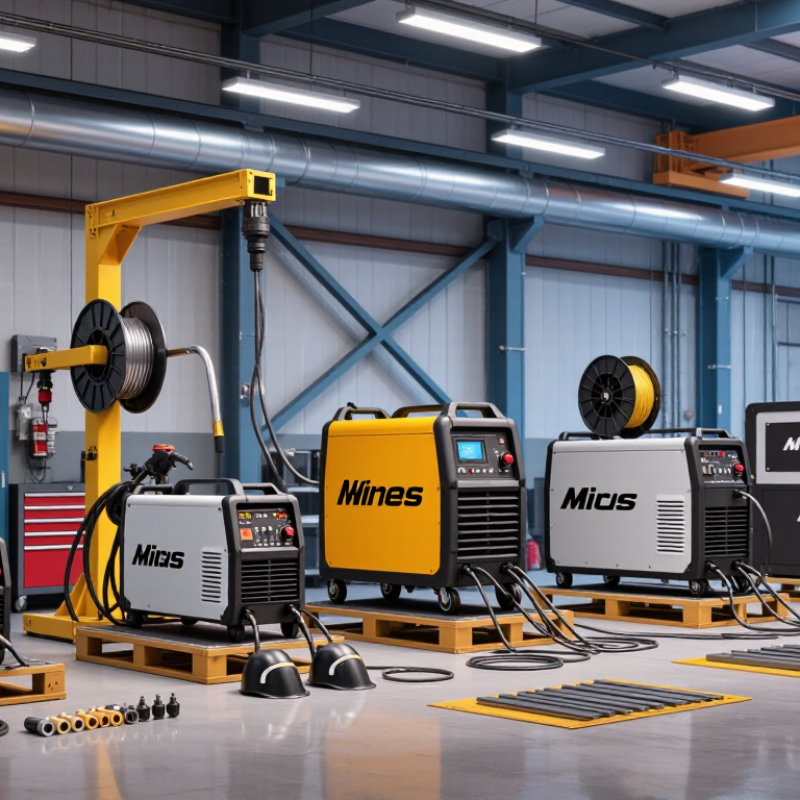
This guide examines the main Welding Machine types, including MIG, TIG, stick, flux-cored, and multi-process models. Each type offers practical advantages. MIG machines support fast production and clean handling on suitable metals. TIG machines provide precise control for stainless steel, aluminum, and detailed fabrication. Stick welders remain useful outdoors, especially where wind affects shielding gas. Multi-process equipment can reduce tool changes, but its extra functions may increase cost and learning time.

Details matter.

Experienced buyers should check duty cycle, input voltage, amperage range, wire or electrode compatibility, portability, and cooling design. A bright display is helpful, but it cannot replace stable arc performance. Local parts availability and technician support also influence long-term value. In some markets, certification requirements and plug configurations may affect purchasing decisions, so buyers should confirm current regional rules before importing equipment.

There is no perfect machine for every project. Even experienced users can overestimate advertised performance. A realistic evaluation should include sample welds, maintenance access, consumable costs, and operator skill. This 2026 overview offers evidence-based guidance for comparing dependable options and avoiding decisions based only on low prices or impressive specifications.
2026 Best Welding Machine Types for Global Buyers

2026 Welding Machine Taxonomy: ISO 4063 Codes 111, 131, 135, 141, and 311

2026 Best Welding Machine Types for Global Buyers

The ISO 4063 codes offer a practical language for comparing welding equipment across borders. Code 111 means manual metal arc welding, commonly called stick welding. It suits outdoor repairs, structural work, and rusty steel because its flux-coated electrodes tolerate less-than-perfect surfaces. However, electrode changes slow production and require steady hand control.

Code 131 identifies MIG welding with an inert shielding gas, while code 135 covers MAG welding with an active gas mixture. These processes feed a continuous wire, making them efficient for workshops and repeated fabrication. Check wire diameter, torch length, gas compatibility, and duty cycle before purchasing. A machine may look powerful on paper, yet struggle during long welds. That detail is often overlooked.

Code 141 refers to TIG welding, using a non-consumable tungsten electrode. It delivers clean, controlled welds on stainless steel, aluminum, and thin sections. The process is slower, but the finish can justify the extra skill. Code 311 describes oxy-acetylene welding, which uses fuel gas and oxygen rather than an electric arc. It remains useful for heating, brazing, and certain maintenance tasks. Safety systems and trained operation are essential. In my experience, buyers sometimes treat these codes as product rankings. They are not. ISO 4063 identifies the process, not the machine’s complete quality. Power supply, ventilation, consumables, operator training, and local service support still deserve careful review. A perfect code match can still become the wrong purchase.
Power-Source Selection Under IEC 60974-1: AC, DC, and Multiprocess

2026 Best Welding Machine Types for Global Buyers

Power-source selection should begin with the welding process, not the advertised amperage. IEC 60974-1 covers arc-welding power sources, including safety, performance, and output characteristics. It provides a reliable technical baseline, but it cannot choose the correct machine for every workshop. Start with the workpiece.

AC output suits aluminium and some specialized applications requiring stable arc behavior. DC output supports common steel, stainless steel, and many electrode processes. For TIG work, buyers should confirm whether the machine offers high-frequency starting, adjustable balance, and suitable AC waveform control. These details affect arc stability, cleaning action, and heat distribution.

Multiprocess machines can combine MIG/MAG, TIG, and MMA functions in one enclosure. They reduce equipment changes and may help mobile contractors. Yet, compact designs can compromise duty cycle or advanced TIG control. Check the duty-cycle rating, test temperature, input voltage, frequency, and phase requirements. Compare these values with actual site conditions, not ideal workshop power. It is easy to overlook this.

Ask suppliers for IEC 60974-1 conformity information, test documentation, protection details, and clear output ratings. Inspect cable connections, cooling paths, display readability, and control response during a practical demonstration. A machine rated at 300 amperes may deliver less usable output at the required duty cycle. That difference matters. My own selection checklist would also record repair access and operator training needs, because a technically capable machine can still perform poorly when settings are confusing.

Reading IEC 60974-1 Duty Cycles: 40%, 60%, and 100% at Rated Amps

For global buyers, duty cycle is not a marketing decoration. It describes how long a welding machine can operate at a stated current during a ten-minute test period. Under IEC 60974-1, a 60% rating at 200 A means six minutes of welding, followed by four minutes of cooling. A 40% rating allows four minutes at the same rated current. A 100% rating supports continuous operation at that current, provided test conditions remain relevant. The rating has limits.

In a workshop, this difference becomes visible quickly. At 200 A, a 40% machine may pause while an operator cleans slag, changes electrodes, and checks a joint. That pause may not be enough during long seams or repetitive fabrication. A 60% model offers a more practical rhythm. A 100% unit suits sustained production, but it may require more investment and a suitable electrical supply. Buyers should compare rated current, duty cycle, input voltage, frequency, and ambient temperature together. Never compare equal percentages at different amperages.

Ask for the test standard and exact rated output. Some listings emphasize maximum current with a much lower duty cycle. That number can look impressive. It may disappoint on thick steel. Also check local voltage, cable length, ventilation, and elevation. Practical testing suggests leaving working headroom is wiser than buying at the limit. Still, this is not universal; occasional repair work may not justify a larger machine. One common assumption needs reflection: a higher duty cycle does not automatically produce better weld quality. Correct settings, sound technique, and controlled consumables matter just as much.

2026 Best Welding Machine Types for Global Buyers — Reading IEC 60974-1 Duty Cycles

IEC 60974-1 duty cycle ratings are commonly expressed over a 10-minute test period at the machine’s rated welding current. The chart converts each rating into equivalent arc-on time.

A 40% duty cycle means 4 minutes of welding followed by 6 minutes of cooling within a 10-minute period. A 60% rating allows 6 minutes of welding, while 100% allows continuous welding at the stated rated current. Actual performance can vary with ambient temperature, cooling conditions, cable size, and operating environment.

Global Safety Compliance: IEC 60974-10 EMC, CE, UL, and UKCA

2026 Best Welding Machine Types for Global Buyers

For global buyers, welding machine selection starts with electromagnetic compatibility, not output power alone. Inverter MIG, TIG, and MMA machines can create electrical noise during switching. IEC 60974-10 addresses EMC performance for arc welding equipment. A compliant machine should limit emissions and maintain stable operation near other electrical systems. This matters in workshops with CNC equipment, sensors, and wireless controls. Small details matter.

Tips: Ask for the latest EMC test report, declaration of conformity, and technical file references. Check the model number carefully. A certificate for one revision may not cover another. Confirm input voltage, plug configuration, and local frequency before ordering. These checks prevent expensive surprises.

CE marking may apply when the machine meets relevant European requirements. UKCA may be required for the Great Britain market, depending on current rules and product scope. UL certification or evaluation can support acceptance in North American supply chains, but buyers should confirm the exact national requirement. Do not rely on a logo alone. Review testing dates, applicable standards, and authorized documentation. From field experience, incomplete paperwork often delays installation more than mechanical defects. Compliance is not always perfectly clear, and requirements can change. A responsible supplier should explain limitations honestly and provide traceable records.

2026 Best Welding Machine Types for Global Buyers - Global Safety Compliance: IEC 60974-10 EMC, CE, UL, and UKCA

Comparison of commonly purchased welding equipment types, typical technical ranges, and major market-access considerations. Actual ratings and conformity requirements depend on the specific model, voltage configuration, accessories, and destination country.

Welding Machine Type Primary Process Typical Output Range Common Input Configuration Best-Fit Applications IEC 60974-10 EMC CE Market Access UL / North American Considerations UKCA Market Access
Inverter MMA / Stick Welder
Manual metal arc welding power source
MMA / SMAW Approximately 120–400 A
Typical duty cycle: 20–60% at rated current
Single-phase 110–120 V or 220–240 V;
three-phase versions also available
Maintenance, structural steel, field repair, construction, and general fabrication Applicable
EMC performance should be assessed against the applicable edition of IEC 60974-10.
Typically applicable
CE conformity normally considers EMC and electrical-safety requirements, including applicable EU directives.
Model-dependent
Check applicable US or Canadian safety certification requirements and local installation rules; UL 60974-1 may be relevant for qualifying arc-welding power sources.
Typically applicable
UK requirements generally include EMC and electrical-equipment safety conformity under the applicable UK regulations.
MIG/MAG Welding Machine
Gas-shielded wire-feed system
GMAW MIG MAG Approximately 150–600 A
Wire diameters commonly 0.6–1.6 mm
Single-phase 220–240 V for compact units;
three-phase for industrial units
Automotive repair, fabrication, machinery, sheet metal, and production welding Applicable
The wire feeder, power source, and integrated control system should be evaluated as configured for sale.
Typically applicable
The complete electrical assembly may require EMC, low-voltage, RoHS, and other applicable conformity assessments.
Model-dependent
Verify the complete system, including power source, wire feeder, torch controls, and input cable configuration.
Typically applicable
UK documentation, marking, and importer or responsible-person obligations should be confirmed before shipment.
AC/DC TIG Welder
Precision arc-welding power source
GTAW TIG Approximately 160–500 A
AC output is used for aluminium and magnesium applications
Single-phase 220–240 V for portable units;
three-phase input for higher-capacity equipment
Stainless steel, aluminium, aerospace components, food equipment, pipework, and precision fabrication Applicable
High-frequency ignition and inverter switching can make EMC design and testing especially important.
Typically applicable
Confirm EMC emissions, immunity, electrical safety, technical documentation, and declaration requirements.
Model-dependent
High-frequency start circuits and foot-control accessories should be included in the safety and EMC review.
Typically applicable
UK conformity documentation should cover the complete TIG system and supplied accessories.
Multiprocess Welder
Combined welding power source
MMA MIG/MAG TIG Approximately 180–500 A
Output and duty cycle vary by selected process
Single-phase 220–240 V for compact units;
three-phase input for heavy-duty models
Workshops and contractors requiring process flexibility with reduced equipment count Applicable
Testing should reflect the operating modes, connected accessories, and worst-case EMC configuration.
Typically applicable
The conformity assessment should cover every integrated function and supplied operating mode.
Model-dependent
Certification scope should match the complete multifunction product rather than only one welding mode.
Typically applicable
Ensure the technical file and instructions address all supported processes and operating configurations.
Submerged Arc Welding System
Mechanized high-deposition equipment
SAW Approximately 400–1,500 A
Often configured as a continuous-duty industrial system
Predominantly three-phase industrial input;
voltage depends on the destination market
Long seams, pressure-vessel fabrication, shipbuilding, structural beams, and heavy plate Applicable
Evaluate the power source together with the travel carriage, controller, wire feeder, and auxiliary equipment where supplied as one system.
System-dependent
Additional machinery, electrical-safety, and installation requirements may apply to the complete automated line.
System-dependent
Industrial installation, control-panel, and field-wiring requirements may apply in addition to power-source certification.
System-dependent
The complete mechanized system may require assessment beyond the welding power source alone.
Engine-Driven Welding Generator
Portable power source for remote work
MMA TIG Auxiliary AC Approximately 150–600 A welding output;
auxiliary generator output varies by engine and alternator design
Internal combustion engine;
may provide 120 V, 230 V, or other auxiliary output
Pipeline work, remote construction, agricultural repair, emergency maintenance, and outdoor fabrication Configuration-dependent
IEC 60974-10 may apply to the arc-welding function; the engine-generator assembly can have additional EMC and emissions requirements.
Multiple-regulation product
Electrical, EMC, machinery, engine-emissions, noise, and fuel-system requirements may all need review.
Multiple-certification scope
Confirm welding-equipment, generator, engine, emissions, and workplace-safety requirements for the destination.
Multiple-regulation product
UK requirements may cover the electrical equipment, engine emissions, noise, machinery, and fuel system.
Plasma Cutting Power Source
Arc-based thermal cutting equipment
Plasma Cutting Approximately 30–160 A cutting current;
capacity depends on material, speed, and consumables
Single-phase 110–120 V or 220–240 V for compact units;
three-phase input for industrial cutters
Sheet cutting, fabrication, maintenance, HVAC work, and automated cutting tables Generally applicable
Plasma cutting equipment is normally assessed within the scope of arc-welding equipment EMC requirements.
Typically applicable
EMC and electrical-safety conformity should be assessed together with torch, air system, controls, and supplied accessories.
Model-dependent
Check applicable electrical-safety certification, EMC, compressed-air, torch, and installation requirements.
Typically applicable
Confirm UK marking and technical documentation for the complete plasma-cutting equipment configuration.
Resistance Spot Welder
Pressure-based resistance welding equipment
RSW Spot Welding Typically 2–25 kA welding current;
short-duration current pulses are common
Usually single-phase or three-phase industrial input;
transformer and control design determine the supply requirements
Automotive panels, sheet-metal assemblies, wire products, battery components, and appliance production Not normally the primary standard
IEC 60974-10 is intended for arc-welding equipment; resistance welders require the applicable resistance-welding EMC and safety standards.
Product-specific
CE obligations may include EMC, electrical safety, machinery safety, and risk assessment for integrated production equipment.
Product-specific
Certification and installation requirements depend on the welder design, controls, transformer, guarding, and intended workplace.
Product-specific
UK requirements should be reviewed for the electrical equipment and any integrated machinery or automated cell.
Compliance notes: IEC 60974-10 addresses electromagnetic compatibility for applicable arc-welding equipment; it is not a general product-safety approval or a market-access mark. CE and UKCA are conformity markings used under the applicable European Union and United Kingdom legislation, respectively. UL is a certification framework and mark used for qualifying products and is not automatically required for every shipment to North America. Buyers should request the applicable test reports, declaration of conformity, user instructions, rating plate information, risk assessment, and destination-country requirements before placing an order.

Buyer Matrix: Match Output, IP Ratings, Portability, and Total Cost

2026 Best Welding Machine Types for Global Buyers

Choosing the right welding machine requires more than comparing amperage. A practical buyer matrix should connect output, duty cycle, IP rating, portability, and total cost.

MIG/MAG MIG/MAG machines suit faster fabrication and thicker steel.
TIG TIG machines offer precise control on stainless steel and aluminum.
Stick Stick welders remain useful outdoors, especially where wind affects shielding gas.
Multiprocess Multiprocess units reduce equipment count, but their added functions may increase maintenance needs.

Keep it honest.

Output should match real work, not the largest number on a label. Check the duty cycle at your expected amperage and ambient temperature.

On dusty construction sites, a suitable IP rating can reduce damage from solid particles or moisture. However, IP protection does not excuse poor ventilation, careless cleaning, or exposure beyond the tested conditions.

I have seen compact machines fail early because cables were coiled tightly during long welds. A field trial is worth more than a confident brochure.

Portability includes weight, handle design, cable length, and generator compatibility. Total cost includes electrodes, wire, shielding gas, filters, servicing, electricity, and downtime.

A lower purchase price can become expensive when consumables are difficult to source locally. Ask for repair guidance, spare-part availability, and clear electrical specifications.

Independent testing under typical site conditions can reveal unstable arcs or overheating. Small omissions become expensive.

One imperfect matrix is better than a polished guess, but it should be revised after operators use the machine.