How to Choose the Best Mig Co2 Welding Machine for Your Needs?
When choosing a Mig Co2 Welding Machine, understanding your needs is crucial. This decision greatly impacts your welding projects. A suitable machine ensures quality and efficiency. Different projects may require different features.
Many factors come into play, such as power output and duty cycle. It’s essential to balance these with your skill level. A more powerful machine may appear appealing. However, beginners might find it challenging to handle. Additionally, portability may matter based on your workspace.
Researching various brands can be overwhelming. Each claim to offer the best welding machines. It’s important to read reviews and compare specifications. Your choice should reflect both your current needs and future aspirations. A well-chosen Mig Co2 Welding Machine can enhance your welding experience. It can also lead to remarkable results in your projects.
Understanding the Basics of MIG CO2 Welding Machines
MIG CO2 welding machines are essential in various industries. Understanding their core functions and features is crucial for effective usage. These machines utilize a continuous feed of welding wire and gas. This process results in a strong and stable arc, making them ideal for thick materials. Studies show that MIG welding is suitable for over 80% of welding applications due to its versatility and efficiency.
The popularity of MIG CO2 machines has surged. As per a recent report from the American Welding Society, this method accounts for approximately 40% of all welding processes in the United States. Users favor the ease and speed that MIG CO2 welding offers. However, new users may struggle with settings and techniques. Learning the optimal wire speed and voltage settings can take time and practice. It’s common to experience inconsistencies in bead appearance during the initial stages.
Choosing the right machine involves assessing your specific needs. Beginners may prefer user-friendly models. More experienced welders often seek machines with advanced controls. Remember, it’s not only about power. Quality construction and safety features are paramount. Reflecting on your actual needs will lead to better choices.
Key Features to Consider When Selecting a MIG CO2 Welder
When selecting a MIG CO2 welder, several key features come into play. Power output is crucial. More power allows for thicker materials. Consider the voltage and amperage ratings. A higher range will give you flexibility for various projects. Portability is also important. If you move around often, a lighter machine is beneficial.
Think about duty cycle too. This tells you how long you can weld before taking a break. A higher duty cycle is better for continuous work. Features like adjustable wire speed and gas flow are significant. They give you more control over the welding process.
Don't forget the type of materials you'll work with. Some welders perform better on certain metals. Look for versatility in your machine. Reviews and expert opinions can offer valuable insights. Read about real experiences to gauge reliability. This helps you avoid potential pitfalls.
Comparing Different MIG CO2 Welding Machines on the Market
Choosing the right MIG CO2 welding machine can be daunting. The market offers a variety of models, each with unique features. Beginners often feel overwhelmed by the choices available. It helps to focus on your specific needs, such as the materials you'll be welding and the thickness involved.
Not all machines are created equal. Some are lightweight and portable, ideal for small projects. Others offer higher output for larger tasks. Pay attention to the duty cycle. A higher duty cycle allows for longer continuous welding, which is crucial for extensive jobs. Compare the ease of use and the learning curve. Some machines are user-friendly, making them suitable for novices.
It's wise to look for reviews and user feedback. Real-world experiences provide insights that are often missing from technical specifications. Keep in mind that some models may have durability issues or inconsistent performance. Balancing your budget with quality is essential. Investing a bit more may result in a machine that lasts longer and performs better.
Comparison of MIG CO2 Welding Machines
Assessing Your Welding Needs and Applications
When assessing your welding needs, consider the materials you'll work with. Different metals require varying levels of heat and precision. For instance, aluminum needs careful attention, while mild steel may be more forgiving. Understand which materials fit your projects best. This insight helps narrow down the right MIG CO2 welding machine.
Think about the scale of your projects. Are you working on small repairs or large constructions? Smaller jobs might not need a heavy-duty machine. In contrast, larger applications benefit from robust models with higher amperage. Consider mobility, too. Will you be welding in a fixed space or on-site? A lighter machine can make a significant difference in convenience and accessibility.
Don't overlook your skill level. Beginners may prefer simpler machines with easier controls. More experienced welders might want features that provide greater flexibility and control. Reflect on your experience and goals. This understanding guides you in finding a welding machine that aligns with your specific needs. Evaluating your unique requirements can lead to better outcomes and increased satisfaction with your work.
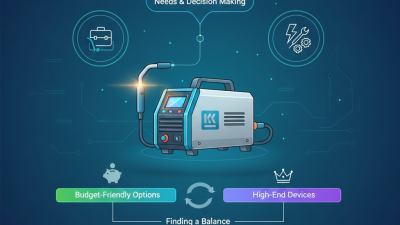
Budget Considerations for Purchasing a MIG CO2 Welding Machine
When considering a MIG CO2 welding machine, budget is a crucial factor. According to industry reports, a quality welding machine can range from $500 to $1,500. Lower-priced models might lack essential features. Always evaluate your specific needs before committing. The average hobbyist may spend around $800, while professionals typically invest more for additional capabilities.
Tips: Determine how often you'll use the machine. Casual users might not need high-end features. Invest in a welder that meets your skill level. Features like adjustable voltage settings can enhance usability.
Remember, the initial cost isn’t everything. Maintenance costs add up over time. Check parts availability and warranty options. A machine might be cheaper upfront but costly in the long run. Reports show that long-term users spend about 20% of their initial investment annually on maintenance. Focus on balancing upfront costs with long-term value.
 WeChat Online Service