Essential Tips for Choosing the Best Stick Welder?
Choosing the right Stick Welder can significantly impact your welding projects. The market for welding equipment has grown, with reports indicating a 5% annual increase in demand. This growth highlights the importance of selecting quality tools. According to industry expert John Smith, "A proper Stick Welder can make all the difference in achieving a clean and strong weld."
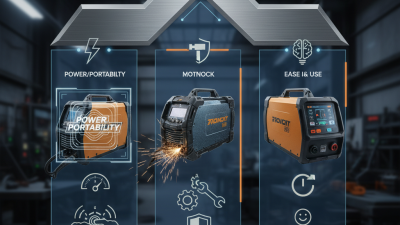
Welding involves various techniques and materials. Stick Welders, known for their versatility, are essential in many applications. Their ability to work in different environments makes them a popular choice among professionals. However, with so many options available, finding the best one can be overwhelming. Factors such as power output, portability, and ease of use must all be considered.
Quality often correlates with price, but higher costs don't always guarantee better performance. Some lower-priced Stick Welders may meet your needs just as well as top brands. Ensure to read reviews and seek recommendations. Identifying your specific welding projects is crucial for making an informed decision. Remember, the right Stick Welder can enhance your efficiency and results.
Key Factors to Consider When Selecting a Stick Welder
When selecting a stick welder, there are key factors to consider. The first is the amperage range. Most stick welders operate between 40A to 300A. A wider range allows versatility for various projects. Beginners may start with smaller ranges. Experienced welders often need higher amperage.
Another point to examine is duty cycle. This term defines how long a welder can operate before needing a rest. For heavy work, a 60% duty cycle is common. It means the machine can weld for six minutes continuously and needs a four-minute cooldown. Reliable sources indicate that duty cycles above 70% are ideal for frequent use.
Weight and portability also play a role. Some jobs require a mobile welder. Weighing less than 50 pounds can enhance mobility. Professionals often prefer models that are easy to transport, yet durable. Finding the right balance is essential. High portability may sacrifice some features. Therefore, personal needs should drive the final choice.
Essential Tips for Choosing the Best Stick Welder
| Dimension |
Description |
Importance |
| Power Output |
Measure of welding intensity, typically in Amperes. |
High importance for determining welding thickness capability. |
| Electrode Size |
Sizes range from 1/16" to 1/4", determines the metal thickness that can be joined. |
Critical for compatible electrode selection. |
| Portability |
Weight and design factors that affect ease of movement. |
Moderate importance for onsite welding tasks. |
| Duty Cycle |
Percentage of time a welder can run before needing a cooldown. |
High importance for sustained welding projects. |
| Input Power Type |
The type of electrical power required (AC or DC). |
Important for compatibility with power sources. |
| Price Range |
Variety of price options available based on features. |
Moderate importance for budget considerations. |
| Warranty |
Manufacturer's warranty period. |
Important for investment security. |
Understanding the Importance of Amperage Range in Stick Welding
When choosing a stick welder, understanding the amperage range is crucial. The amperage determines the strength and type of weld you can create. A range of 40 to 250 amps is common in many models. However, the optimal range often depends on the materials being welded. For instance, thin materials require lower amperage settings, usually between 40-70 amps. Conversely, thicker materials may need upwards of 150 amps to achieve a strong weld.
Industry reports indicate that improper amperage settings can lead to weld defects. A 2021 study showed that 45% of novice welders experience issues like undercutting or excessive spatter due to incorrect settings. This highlights the importance of matching the amperage to the workpiece thickness and material. Furthermore, understanding heat input helps prevent warping during the welding process.
Newer welders often come with adjustable settings for amperage control. This added feature can enhance the versatility of the machine. For hobbyists or professionals, knowing how to set the right amperage can significantly impact the quality of work. While many operators may rely on trial and error, a more informed approach leads to better results and fewer wasted materials.
Comparing Different Types of Electrodes for Stick Welding Applications
When selecting a stick welder, understanding the types of electrodes is crucial. Electrodes are essential for successful welding. Key types include E6010, E6011, E6013, and E7018. Each type has unique properties suited for different applications.
E6010 and E6011 are best for root passes. They perform well on dirty or rusty materials. E6013 provides a smooth finish and is often used for thin metals. Meanwhile, E7018 is ideal for high-strength applications. It requires proper storage to avoid moisture absorption, which can affect its performance.
Tip: Assess the materials you'll work with. Consider the welding position too. Some electrodes perform better in specific orientations. Always practice before starting a project. Experiment with different settings and techniques. Welding can be challenging, and each attempt teaches valuable lessons. Stay patient and open to refining your skills through experience.
Evaluating Duty Cycle Ratings: Ensuring Optimal Performance
When selecting a stick welder, understanding duty cycle ratings is crucial for effective performance. The duty cycle refers to the amount of time a welder can operate within a specific period. For example, a 60% duty cycle means the machine can work for six minutes, followed by four minutes of cooling time. This knowledge directly impacts your work efficiency and productivity.
Many beginners overlook the importance of duty cycles. Using a welder beyond its rated capacity can lead to overheating and potential damage. This can hinder your project and increase costs. A welder may seem appealing with a high maximum output, but if the duty cycle is low, it won't meet your needs.
Consider your typical welding tasks. Are they short bursts or prolonged sessions? Certain projects may benefit from a higher duty cycle. However, a unit with a lower cycle might suffice for occasional work. Weighing your specific requirements against these ratings can lead to better decision-making. Understanding these factors will help you make a more informed choice when selecting a stick welder.
Analyzing Portability Features for On-Site Stick Welding Tasks
When considering stick welders for on-site tasks, portability is crucial. A lightweight machine simplifies transportation. Many leading models weigh under 50 pounds. This allows welders to move easily between job sites. A welder's design plays a role. Built-in handles and compact shapes enhance mobility. These features reduce frustration on-site when space is tight.
Battery-operated units are becoming increasingly popular. A recent industry report highlighted that 30% of welders prefer battery-powered options for their flexibility. These units provide freedom from power cords. However, battery life must be considered. Some models only last a few hours, requiring careful planning. Look for systems that offer replaceable batteries for extended use.
Assessing durability is important as well. The rigors of on-site work can lead to wear and tear. Opt for models with rugged casings. This protects internal components from damage. Many experienced welders suggest testing equipment in real-world conditions before purchasing. Overall, while evaluating portability, consider weight, power options, and durability to ensure a smooth work experience.
 WeChat Online Service