Top 10 Gas Welder Brands Buyers Must Consider Now?
Choosing the right gas welder is crucial for both professionals and hobbyists. With many brands available, it can be overwhelming to make a choice. The gas welder market offers numerous options, each with unique features and advantages. Quality, durability, and performance vary significantly among brands.
Understanding the different types of gas welders is essential. Some brands excel in portability, while others focus on precision. Knowing your specific needs can guide you in the right direction. No single brand stands out as the best across all applications.
In this article, we will explore the top 10 gas welder brands worth considering. Each brand has its own strengths and weaknesses. By understanding these differences, you can make a more informed decision. Investing in the right gas welder can significantly enhance your welding projects, both at home and in the workplace.
Top Considerations When Choosing a Gas Welder Brand
When selecting a gas welder brand, several factors play a crucial role.
Quality is paramount. Look for brands known for durability and performance.
A well-built welder ensures safety during operations. Features matter too.
Adjustable heat settings and portability can enhance your welding experience.
Check if the welder adapts to various materials with ease.
User feedback is also essential. Input from experienced welders can provide valuable insights.
Online reviews can highlight inconsistent performance or unexpected issues.
It's wise to consider the warranty offered. A strong warranty reflects a brand's confidence in their product.
Aim for a brand that stands behind its equipment.
Price should not be the only consideration. High-quality welders often come at a higher cost,
but they may save money long-term through reliability. Investing in knowledge and research is key.
Don’t rush into a purchase without fully understanding your needs and the specific capabilities of a brand.
Take your time.
Comparison of Leading Gas Welder Brands: Performance and Reliability
When considering a gas welder, performance and reliability are paramount. Users often seek welders that can handle a variety of materials effectively. Different brands offer unique features that cater to diverse welding needs. Some welders excel in portability, making them perfect for on-site jobs. Others focus on power, providing users with robust options for heavy-duty tasks.
Reliability is another crucial factor. Inconsistent welds can lead to project failures. Buyers should look for welders that have a reputation for durability. It's essential to consider user reviews and expert opinions. These insights can reveal a brand's strengths and weaknesses. Not every gas welder will meet expectations. Some may have design flaws that affect performance over time.
Many users appreciate ergonomic designs for comfort during extended use. However, not all models prioritize this feature. Some welders can feel heavy or awkward. Buyers should evaluate their preferences and work environment. Even the best-rated brands may have models that require adjustments or improvements. Assessing these factors will enhance the overall welding experience.
Top 10 Gas Welder Brands Buyers Must Consider Now
| Feature |
Brand A |
Brand B |
Brand C |
Brand D |
Brand E |
Brand F |
Brand G |
Brand H |
Brand I |
Brand J |
| Welding Speed |
Fast |
Moderate |
Slow |
Fast |
Moderate |
Fast |
Slow |
Fast |
Moderate |
Fast |
| Portability |
Excellent |
Good |
Average |
Excellent |
Good |
Excellent |
Average |
Excellent |
Good |
Excellent |
| Durability |
High |
Medium |
Low |
High |
Medium |
High |
Low |
High |
Medium |
High |
| Price |
$$$ |
$$ |
$ |
$$$ |
$$ |
$$$ |
$ |
$$$ |
$$ |
$$$ |
Key Features to Look for in Gas Welders for Different Applications
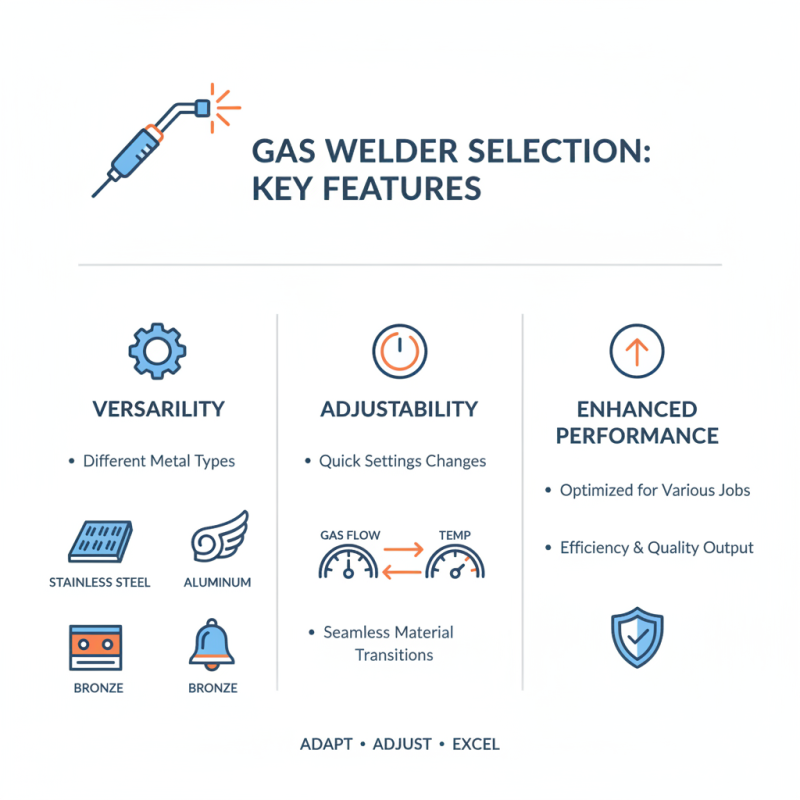
When selecting gas welders, various applications require unique features to enhance performance. One critical aspect is the welder's versatility. Look for machines that can handle different types of metal. Stainless steel, aluminum, and even bronze often need distinct gas settings. A machine that adapts easily is invaluable. It should allow quick adjustments, enabling seamless transitions between materials.
Another key factor is portability. Many users need to move their welders frequently. Lightweight designs make transportation easier. A compact size does not always mean compromise on power. Users should consider welders with sturdy construction that also prioritize maneuverability. Additionally, an intuitive user interface simplifies operation. A well-designed control panel often reduces mistakes, especially for novices.
Lastly, safety features cannot be overlooked. A good welder should include protection against overheating and unexpected gas leaks. Proper shielding and safety cut-offs enhance user confidence. Users should actively seek out machines that prioritize safety while ensuring high performance. Maintenance features, like easy access to parts, also support the durability of the equipment. Investing time in understanding these elements pays off in the long run.
Industry Insights: Popular Gas Welder Brands Among Professionals
When it comes to gas welding, professionals often favor specific brands for reliability and performance. The choice of a gas welder impacts not only the quality of work but also the efficiency of projects. Professionals seek equipment that enhances their skills while ensuring safety. Each brand offers unique features, so understanding the options is crucial.
One popular consideration is the ease of use. Some gas welders provide advanced technology like automatic ignition and adjustable flame control. Features like these can save time and reduce frustration. Welders also appreciate designs that allow easy transportation. A lightweight model can make on-site jobs simpler. Yet, not every brand meets the durability standard. Professionals report mixed experiences with some models breaking under heavy use.
Another point to reflect on is customer support. A brand that offers solid after-sale service often earns more loyalty. Users want to know they can get help when issues arise. On the other hand, some companies fall short in this area, leaving customers feeling abandoned. Thus, buyers must investigate not only the product but also the company's reputation within the industry.
Customer Satisfaction Ratings: Which Brands Stand Out in the Market
When considering gas welders, customer satisfaction ratings highlight the brands that resonate with users. Many buyers report higher satisfaction from brands known for durability and ease of use. They value features like adjustable flame control and portability. It’s essential to read user reviews to understand real-world performance.
Tips for choosing the right welder include assessing your specific needs. Consider the projects you will undertake. A lightweight model may be preferable for portable jobs. Look for a welder with a strong customer service reputation. This can be crucial if issues arise.
Feedback often hints at areas that brands can improve. Users sometimes mention the learning curve with certain models. This indicates that new welders should seek brands with user-friendly features. Make sure to explore community forums for insights. Engaging with experienced users can provide valuable perspectives.

 WeChat Online Service