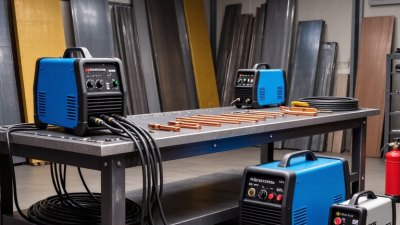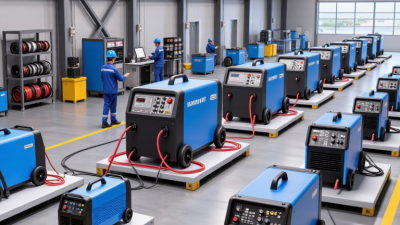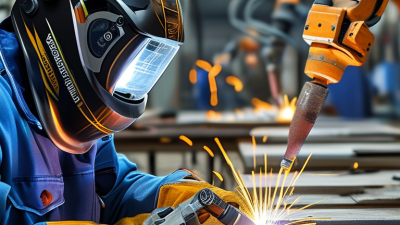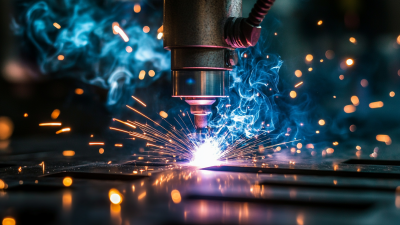
As global fabrication expands, buyers need more than a low-priced machine and a polished specification sheet. The 2026 market is becoming more demanding. Welders now compare arc stability, duty cycle, energy use, portability, service access, and digital controls. According to MarketsandMarkets’ Welding Equipment Market report, the sector is projected to grow from roughly USD 16 billion in 2024 to above USD 20 billion by 2029. Fortune Business Insights also forecasts steady expansion, supported by construction, automotive production, shipbuilding, and infrastructure investment.
These figures show opportunity, but forecasts are not workshop truth. A compact Inverter Welding Machine may perform excellently on site, yet struggle under continuous heavy fabrication. Buyers should match machine design with material thickness, electrode size, input power, and expected daily workload. This guide examines leading 2026 types, including MMA, TIG, MIG/MAG, plasma cutting, and multi-process platforms. Each option has a different balance of precision, speed, maintenance, and operator skill.
MMA remains practical where gas access is limited. TIG offers cleaner control for stainless steel and aluminium work. MIG/MAG supports faster production with suitable wire and shielding gas. Multi-process models save space, but their versatility can increase cost and setup complexity. Recent analysis from Grand View Research highlights automation, energy efficiency, and advanced welding technologies as important market trends. Still, one ranking cannot fit every buyer. A reliable choice depends on real duty cycles, local repair support, and verified testing. Sometimes, the best decision is less impressive on paper. That deserves honest reflection.
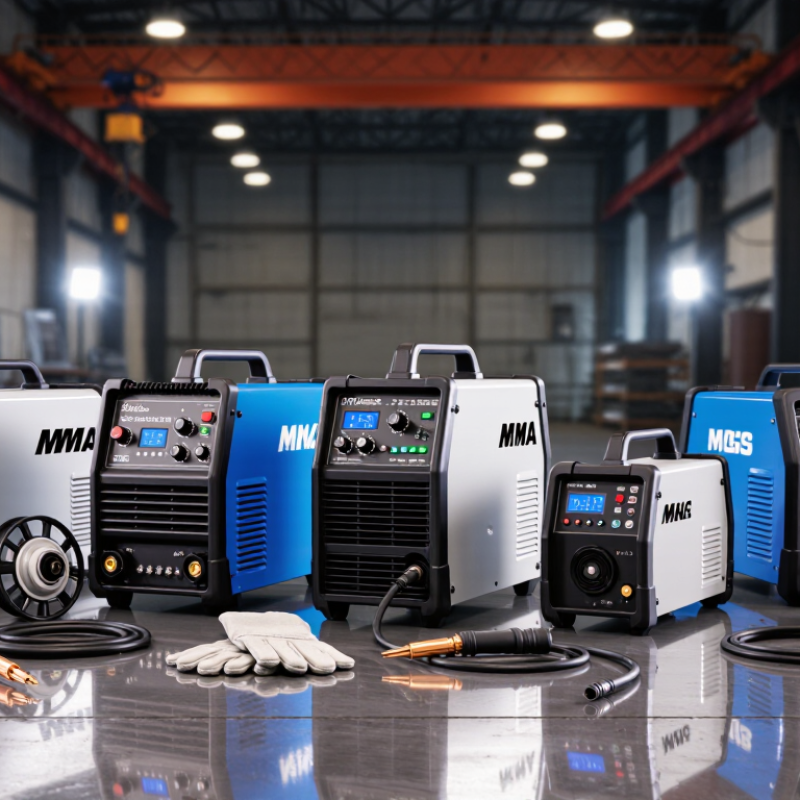
An inverter welding machine changes incoming electrical power through several controlled stages. It first converts AC power into DC power. High-frequency switching then adjusts the current with compact electronic components. A transformer reduces the voltage, while the final circuit delivers a stable welding arc.
This design makes inverter machines smaller and lighter than traditional transformer welders. Many models support MMA, TIG, or MIG processes. MMA machines suit outdoor repairs and structural work. TIG versions provide cleaner control on stainless steel and thin metal. MIG machines offer faster production with continuous wire feeding. In practice, the arc can feel more responsive, but poor settings still create weak welds. I have seen operators blame the machine when incorrect polarity caused spatter and shallow penetration.
Tips: Check the rated duty cycle before buying. A machine marked at 60% duty cycle may need four minutes of cooling after six minutes of welding. Match the output range to your usual metal thickness. Inspect cables, electrode holders, cooling vents, and digital controls before each job. Stable input power also matters. Long extension cords can reduce voltage and disturb the arc. Wear suitable eye protection, gloves, flame-resistant clothing, and proper ventilation. Do not rely on a compact case alone. Its internal electronics still need clean, dry working conditions.
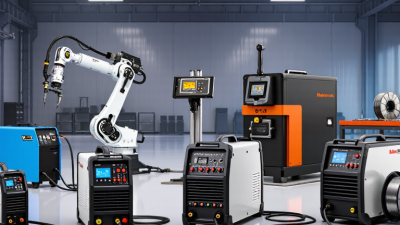
In 2026, global buyers can choose from several inverter welding machine types. MMA, or stick welders, remain practical for outdoor repairs and thick steel. They tolerate dusty sites and unstable power better than many delicate systems.
MIG/MAG machines suit workshops needing faster wire feeding and cleaner production. They work well on mild steel, stainless steel, and aluminum with suitable wire and shielding gas.
TIG inverters provide precise, low-spatter welds for stainless steel, aluminum, and thin sheet. AC/DC TIG models offer more control for aluminum joints.
Multi-process machines combine MMA, MIG, and TIG functions in one cabinet. Compact battery-supported models are also gaining attention for maintenance teams working far from fixed power.
However, portability can reduce duty cycle. The smallest machine is not always the best choice.
Tips: Check output current, duty cycle, input voltage, wire size, and protection rating.
A machine rated at 200 amps may deliver that output only for a limited cycle. Confirm local electrical requirements before purchase. Test cable length and torch balance, too. Small details matter.
Reliable suppliers should provide technical documents, safety guidance, spare-part support, and conformity information for the destination market. A common mistake is choosing by amperage alone; actual performance depends on materials, joint design, operator skill, and working conditions.
Global buyers compare welding processes before comparing inverter models. The choice changes speed, finish, maintenance, and operator skill. SMAW remains practical for outdoor repairs because it needs no shielding gas. However, electrodes create slag and require frequent replacement. GMAW offers faster production and cleaner welds on prepared steel. Wind can disturb its shielding gas, especially on open construction sites. GTAW provides excellent control on thin stainless steel and aluminum. It is precise, but noticeably slower.
FCAW suits thicker sections and difficult field conditions. Self-shielded wire reduces gas dependence, though it produces more fumes and slag. SAW delivers high deposition rates on long, flat welds. It is less useful for small parts or changing positions. Fortune Business Insights estimated the global welding equipment market at USD 16.54 billion in 2023. Its projected growth also reflects demand for compact, efficient inverter systems. The 2024 U.S. Bureau of Labor Statistics outlook lists about 434,700 welding-related jobs in 2023. That figure makes simple controls and dependable training important for international buyers. Still, market numbers cannot replace a site trial. A process that looks efficient on paper may disappoint in humidity, unstable power, or limited ventilation. Check ISO 4063 process classifications, input voltage, duty cycle, consumable access, and local service capacity before purchasing. The cheapest option is often not the lowest-cost option.
Typical deposition rate indicates how quickly a welding process can add weld metal. GMAW, FCAW, and SAW are generally preferred for higher productivity, while GTAW provides greater control for precision work and SMAW offers strong portability for field applications. Actual performance varies with current, consumable size, material, welding position, duty cycle, and operator skill.
The values shown are representative midpoints of commonly reported operating ranges and are intended for process comparison, not as guaranteed machine specifications.
For global buyers, an inverter welder should match the worksite, not just the catalog. Check input voltage carefully, especially when equipment may travel between regions. A wide input range can reduce voltage-related interruptions. Confirm the rated output at the correct duty cycle. A machine claiming 200 amps may deliver that current for only a short period.
Duty cycle matters. So does thermal protection. Look for clear data at a stated ambient temperature, such as 40°C. Useful arc controls include hot start, arc force, and anti-stick functions. They help with difficult starts, unstable rods, and accidental contact. For thin steel, adjustable current and stable low-amp performance are more valuable than maximum output.
Small details matter.
Consider electrode size, welding mode, cable length, and cooling design. If the unit will use a generator, verify its required input power and acceptable voltage stability. A power factor correction system may improve efficiency, but it does not solve every poor supply problem. Check enclosure protection when dust or moisture is expected, and inspect ventilation paths before purchase. Safety features such as over-temperature shutdown and voltage reduction should be documented, not assumed. Product tests, service access, spare-part availability, and a readable manual also deserve attention. Specifications can look impressive, yet real performance may change with cable loss, operator skill, and hot workshop conditions. That limitation is easy to underestimate.
| Inverter Welder Type | Primary Welding Process | Typical Input Power | Typical Output Range | Common Duty Cycle | Suitable Materials | Typical Electrode, Wire or Torch Options | Important Technical Features | Typical Efficiency | Portability | Best-Fit Applications | Key Selection Considerations |
|---|---|---|---|---|---|---|---|---|---|---|---|
| Inverter MMA / Stick Welder | Manual metal arc welding using coated electrodes | Single-phase 110–120 V or 220–240 V; three-phase models are also available for industrial use | 20–200 A for compact units; 20–400 A for industrial units | Approximately 20–60% at rated current, depending on model and ambient temperature | Carbon steel, stainless steel, cast iron and some low-alloy steels | Usually 1.6–5.0 mm coated electrodes; common electrode families include rutile and basic types | Hot start, arc force, anti-stick, stable low-current arc and dependable open-circuit voltage | Typically 80–90% | Excellent; compact models commonly weigh about 3–8 kg | Repair work, construction, farm maintenance, outdoor fabrication and pipeline support work | Check electrode diameter capacity, generator compatibility, cable quality, enclosure protection and performance with long extension leads |
| DC TIG Inverter Welder | Gas tungsten arc welding with direct current | Single-phase 110–120 V or 220–240 V | 5–200 A for portable models; up to approximately 300 A for heavier-duty units | Approximately 25–60% at maximum rated current | Stainless steel, carbon steel, copper, titanium and other ferrous or conductive metals | Non-consumable tungsten electrodes; argon shielding gas; optional foot pedal or remote control | High-frequency or lift ignition, pre- and post-flow control, downslope, pulse control and accurate low-current adjustment | Typically 80–90% | Very good; portable units commonly weigh about 5–12 kg | Thin sheet fabrication, food and chemical equipment, bicycle frames, maintenance and precision repair | Prioritize arc stability below 20 A, pulse frequency range, torch cooling method, gas control and remote-control compatibility |
| AC/DC TIG Inverter Welder | TIG welding with alternating current or direct current | Single-phase 220–240 V; selected high-output models use three-phase input | 5–250 A for general fabrication; up to approximately 400 A for industrial systems | Approximately 30–60% at maximum rated current | Aluminum and aluminum alloys, stainless steel, carbon steel, copper and titanium | Tungsten electrodes, argon or argon-helium shielding gas, water-cooled torch options for high current | AC balance, AC frequency, adjustable waveform, high-frequency start, pulse mode and programmable memory channels | Typically 80–90% | Moderate; advanced models commonly weigh about 12–30 kg before accessories | Aluminum fabrication, motorsport parts, aerospace-style repair, pressure components and precision workshops | Compare aluminum cleaning control, AC frequency range, thermal management, control-panel usability and cooling-system requirements |
| Inverter MIG/MAG Welder | Gas metal arc welding with solid or flux-cored wire | Single-phase 220–240 V or three-phase 380–415 V for industrial models | 30–250 A for general-purpose units; approximately 300–500 A for production systems | Approximately 30–60% at rated output; industrial systems may exceed 60% | Carbon steel, stainless steel and aluminum when the wire-feed system and shielding gas are correctly selected | Solid wire commonly 0.6–1.2 mm; flux-cored wire commonly 0.8–1.6 mm | Stable wire feeding, inductance control, burn-back adjustment, synergic programs, spool-gun support and thermal overload protection | Typically 80–90% | Moderate; compact units commonly weigh about 10–20 kg, excluding gas cylinder and accessories | Workshops, vehicle repair, structural fabrication, machinery production and repetitive welding | Evaluate wire-feed accuracy, feeder roll configuration, torch length, gas-solenoid response, spool capacity and compatibility with local wire standards |
| Multi-Process Inverter Welder | MMA, DC TIG and MIG/MAG; some models also provide flux-cored welding | Single-phase 110–120 V or 220–240 V; industrial versions may use three-phase input | 20–250 A for portable units; approximately 300–500 A for industrial models | Approximately 25–60%, depending on process, output and cooling design | Carbon steel, stainless steel and aluminum with the correct torch, wire, polarity and shielding gas | Coated electrodes, 0.6–1.2 mm wire, flux-cored wire and TIG tungsten electrodes | Digital parameter control, synergic programs, polarity switching, process memory, spool-gun support and automatic protection functions | Typically 80–90% | Good; commonly about 8–22 kg, excluding external accessories | Maintenance teams, mobile contractors, training centers, small fabrication shops and mixed-material work | Confirm whether the rated output applies to every process, and check included accessories, duty cycle, wire-feed performance and serviceability |
| Industrial Pulse MIG Inverter | Pulse or double-pulse gas metal arc welding | Three-phase 380–415 V is common; some lower-output models use single-phase 220–240 V | 40–400 A, with production models available at higher ratings | Approximately 40–100% at rated current, depending on output and cooling system | Aluminum, stainless steel, carbon steel and thin-to-medium gauge sheet | Solid wire commonly 0.8–1.6 mm; specialized programs may support larger wire sizes | Pulse waveform control, synergic arc programs, crater fill, wire burn-back, arc-length correction and low-spatter transfer | Typically 85–92% | Limited to moderate; commonly about 20–45 kg before cables and torch | Automotive components, aluminum structures, production lines, transportation equipment and high-quality fabrication | Check pulse frequency, program library, wire-feeder precision, cooling capacity, data logging and compatibility with the target material thickness |
| Engine-Driven Inverter Welder | Primarily MMA; selected configurations support TIG and auxiliary power output | Internal gasoline or diesel engine; auxiliary AC output may be available | Approximately 130–500 A, depending on engine size and generator design | Approximately 40–100% at rated current, subject to engine cooling and ambient conditions | Carbon steel, low-alloy steel, stainless steel and field-repair materials | Coated electrodes commonly 2.5–5.0 mm; some models support scratch or lift TIG | Inverter-based current regulation, low fuel consumption, idle control, overload protection and stable output during load changes | Electrical conversion efficiency varies; fuel consumption and engine efficiency are more relevant than electrical efficiency alone | Low to moderate; typically about 40–150 kg, often trailer- or truck-mounted | Remote construction, utility maintenance, field repair, agricultural work and emergency response | Assess fuel consumption, noise, emissions compliance, cold-start performance, service access, grounding and auxiliary power quality |
Note: The specifications shown are representative ranges for commonly available inverter welding equipment. Actual output, duty cycle, efficiency, weight and input requirements vary by design, operating temperature, supply voltage, accessories and applicable regional standards.
Regional welding demand determines the right inverter machine. MarketsandMarkets valued the global welding equipment market at approximately USD 15.2 billion in 2023, with steady growth forecast through 2028. That growth hides different workshop realities. European fabrication plants often need three-phase MIG/MAG inverters for automated steel production and controlled indoor conditions. Portable MMA inverters suit construction repairs, rural maintenance, and windy sites. Short cables matter.
North American buyers should also consider operator availability. The American Welding Society projects a potential shortage of nearly 330,000 welding professionals by 2028. Synergic MIG and multi-process inverters can reduce setup errors for less experienced operators. However, complicated menus may slow training. Simple controls still win sometimes. TIG inverters remain valuable for stainless steel, aluminum, and visible pipework, especially where weld appearance and heat control matter.
In Southeast Asia, Latin America, and parts of Africa, buyers should check voltage stability, generator compatibility, dust protection, and local service access. A lightweight MMA unit may outperform a larger multi-process machine when roads are rough and spare parts are distant. Buyers should compare duty-cycle ratings under IEC 60974-1 conditions, not only headline amperage. A claimed 60% duty cycle may change sharply at high ambient temperatures. I have seen specifications look impressive on paper, yet fail to reflect daily field use. Region-specific trials remain essential.