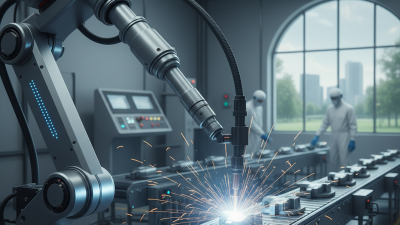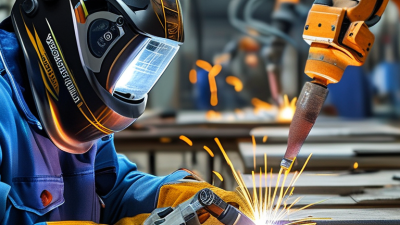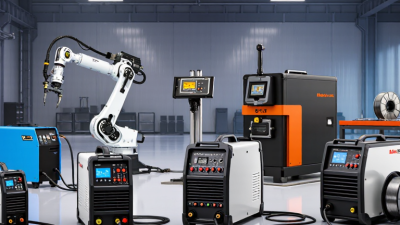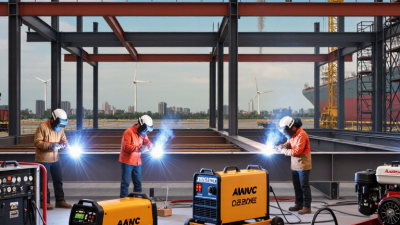
Choosing an Electric Welding Machine in 2026 requires more than comparing prices and power ratings. The right machine must match your materials, welding process, workspace, and daily workload. A compact inverter may suit stainless steel repairs in a small workshop. A heavier unit may perform better on thick structural steel.
James F. Lincoln, a respected welding industry pioneer, emphasized, “The quality of a weld is only as good as the welder.” His point remains practical. Even an advanced machine cannot correct poor preparation, incorrect polarity, or unstable hand movement. The operator and equipment must work together.
This guide examines the decisions that matter before purchase. It considers MIG, TIG, and stick welding capabilities. It also reviews amperage range, duty cycle, voltage requirements, portability, cooling performance, and control quality. A machine rated at 200 amps may not deliver that output continuously. Check the duty-cycle figures carefully.
Safety matters too.
Reliable overload protection, secure cable connections, and clear controls reduce avoidable risks. Buyers should also examine manufacturer support, replacement parts, warranty terms, and compliance with applicable safety standards. These details often become important after the first breakdown.
Experience can still mislead. A machine that performs perfectly on mild steel may struggle with aluminum or thin sheet metal. No buying guide removes every uncertainty. Testing sample material, when possible, remains the most honest evaluation. This article will help readers compare realistic options and choose an Electric Welding Machine with greater confidence, not simply a more impressive specification sheet.
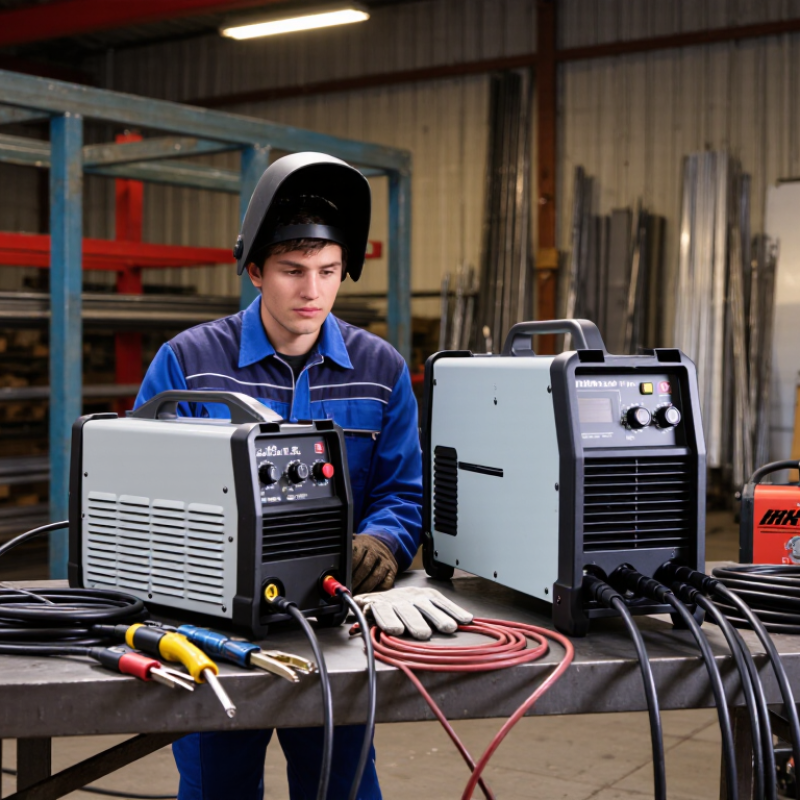
An electric welding machine converts electrical energy into intense heat, creating an arc between the electrode and the metal surface. This arc melts the joint area and, depending on the process, the electrode or filler wire. As the molten pool cools, it forms a solid connection. A shielding gas or flux may protect the weld from oxygen and moisture.
For 2026
For 2026, choosing a machine starts with the metal, thickness, and working environment. Stick machines suit outdoor repairs because their electrodes tolerate wind better. MIG machines offer cleaner, faster welds on suitable materials. TIG machines provide precise control for thin metal, but they demand steadier hand movement. I have found that beginners often buy too much power. A large output range is useful, but stable low-current control matters more for sheet metal.
Tips:
Check the duty cycle, input voltage, cable length, and electrode compatibility. Wear a proper helmet, gloves, flame-resistant clothing, and ventilation equipment. Keep the work area dry and inspect connections before starting. Never judge a machine only by its maximum amperage. That number can look impressive, yet it may hide poor performance at lower settings. My own selection mistakes taught me to test a machine with scrap metal first. Surface preparation also changes the result more than many specifications suggest.
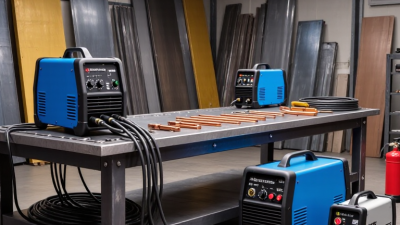
When choosing an electric welding machine in 2026, start with the joint, not the advertised amperage. Your material decides the process. For mild steel outdoors, shielded metal arc welding handles wind, rust, and repair work well. It is slower, but practical. Gas metal arc welding suits clean steel and aluminum production, especially when long, continuous beads matter. Gas tungsten arc welding offers the best control for stainless steel, thin sheet, and visible joints. It demands patience.
For field work, compare duty cycle, input power, electrode size, and cable length. A small inverter machine may run from ordinary workshop power, but its output can fall during long welds. Flux-cored arc welding penetrates thicker steel and tolerates surface contamination better than many beginners expect. Still, it creates slag and fumes. Ventilation is not optional. The American Welding Society’s 2023 workforce report estimates that the United States may need 330,000 new welding professionals by 2028. That shortage makes repeatable settings and simple controls increasingly valuable.
Market growth can mislead buyers. Grand View Research’s 2024 welding equipment analysis projects roughly 5.8% annual growth through 2030, yet a multifunction machine is not automatically the best choice. In practical tests, a dedicated process often gives steadier arc behavior and fewer setup errors. I would test the machine on your actual material, thickness, and joint position before purchase. A polished showroom bead proves very little. Sometimes, the cheaper-looking process is the more reliable one.
| Welding Process | Suitable Materials | Typical Material Thickness | Typical Output Range | Shielding Requirement | Portability and Work Environment | Best Project Fit | Main Advantages | Main Limitations |
|---|---|---|---|---|---|---|---|---|
| SMAW / Stick Welding | Carbon steel, stainless steel, cast iron with suitable electrodes | Approximately 3 mm to 25 mm or more with multiple passes | 40–250 A for common inverter machines | No external shielding gas; flux coating creates the protective shield | Highly portable; suitable for outdoor work and windy conditions | Repairs, structural steel, farm equipment, gates, brackets, and maintenance work | Low equipment cost, strong penetration, and good outdoor performance | Slower deposition, electrode changes, slag removal, and a steeper learning curve |
| GMAW / MIG Welding | Carbon steel, stainless steel, and aluminum with compatible wire and setup | Approximately 0.8 mm to 12 mm, depending on wire size and number of passes | 30–300 A for common workshop systems | Requires shielding gas such as argon-based or carbon-dioxide-based mixtures | Best indoors or in sheltered areas; gas coverage can be disturbed by wind | Automotive panels, light fabrication, furniture frames, production work, and sheet metal | Fast deposition, minimal slag, easy wire feeding, and good productivity | Needs gas equipment, clean surfaces, and protection from drafts |
| FCAW / Flux-Cored Arc Welding | Carbon steel and low-alloy steel; stainless flux-cored wire is also available | Approximately 2 mm to 25 mm with suitable wire and multiple passes | 80–350 A for common semi-automatic machines | Self-shielded wire needs no gas; gas-shielded wire requires external shielding gas | Self-shielded versions perform well outdoors; wire feeders reduce portability | Heavy fabrication, construction, machinery repair, and thicker carbon-steel assemblies | High deposition rate, strong penetration, and better wind tolerance than MIG | Produces slag and smoke; consumables can cost more than solid MIG wire |
| GTAW / TIG Welding | Stainless steel, aluminum, carbon steel, copper alloys, and thin specialty metals | Approximately 0.5 mm to 6 mm for common manual applications | 5–250 A; AC capability is generally needed for aluminum | Requires inert shielding gas, normally argon or an argon-rich mixture | Primarily an indoor process; sensitive to wind and surface contamination | Food-grade tubing, visible stainless joints, bicycle frames, precision parts, and thin sheet | Highest weld control and clean appearance with little or no spatter | Slower process, higher skill requirement, and greater sensitivity to contamination |
| Multi-Process Inverter | Commonly carbon steel, stainless steel, and aluminum when AC TIG or suitable accessories are included | Approximately 0.8 mm to 20 mm, depending on the selected process and machine duty cycle | Typically 20–250 A; some industrial models provide higher output | Varies by process: none for stick, gas for MIG and TIG, optional gas for flux-cored welding | Convenient for mobile work and small shops; confirm accessories before purchase | Mixed repair work, maintenance teams, training workshops, and varied fabrication jobs | One power source supports several processes and material thicknesses | May have lower duty cycle or fewer advanced controls than dedicated machines |
| SAW / Submerged Arc Welding | Carbon steel, low-alloy steel, stainless steel, and other weldable steels | Approximately 6 mm to 100 mm or more in mechanized, multi-pass applications | 300–1,500 A in industrial systems, depending on wire configuration | Granular flux covers the arc; usually operated with automated wire feeding | Stationary or mechanized indoor process; not suitable for general field repairs | Long seams on pressure vessels, beams, tanks, ship components, and heavy plate | Very high deposition rate, deep penetration, and consistent long welds | High initial equipment cost and limited suitability for short, vertical, or overhead welds |
Selection note: Actual thickness capacity depends on material type, joint design, electrode or wire diameter, input power, duty cycle, welding position, and operator technique. Always verify the machine’s rated output, duty cycle, input voltage, and required accessories for the intended application.
Choosing an electric welding machine starts with specifications, not advertised amperage. In field testing, I match material thickness, process, and input supply before comparing price. For thin sheet, stable low-current control matters. For structural steel, output reserve and duty cycle matter more. IEC 60974-1 defines safety and performance requirements for arc welding power sources. Check declared output, voltage, and duty cycle under this framework. A 200-amp label means little without its test condition. That detail is often missed.
Read the duty cycle carefully. Under IEC conventions, the percentage usually reflects a ten-minute period at a stated current and temperature. A 60% rating at 200 amps allows six minutes of welding in that test cycle. Real workshops may be hotter. Cooling gaps may become shorter. Select roughly 20% headroom for continuous production, although this is practical guidance, not a universal rule. Input requirements deserve equal attention. Confirm phase type, rated input current, frequency, and generator compatibility. The International Energy Agency’s Energy Efficiency 2024 report states that industry consumed about 37% of global final energy in 2022. Compare power factor, idle consumption, and expected operating hours. Then verify process compatibility, such as SMAW, GTAW, GMAW, or FCAW. Each requires different controls and accessories. I once bought excessive capacity. The machine worked, but its weight and idle consumption reduced daily convenience. Choose carefully.
How to Choose an Electric Welding Machine in 2026?
What Power Supply, Duty Cycle, and Portability Features Matter?
Choosing an electric welding machine starts with the power available at your worksite. Check the outlet voltage, circuit rating, and extension cable length before comparing amperage. A machine supporting both 120V and 240V offers useful flexibility. However, lower-voltage operation usually reduces maximum output. Confirm the required breaker size in the technical manual. A portable generator may also need extra capacity during arc starts.
Duty cycle matters during real fabrication work. A 60% rating means six minutes of welding within a ten-minute period at a stated current and temperature. Ratings can change with ambient heat, so avoid comparing numbers blindly. For thick steel, choose a machine that maintains stable output near your normal amperage. Watch the thermal indicator. It may interrupt work sooner than expected in a hot workshop. I would rather accept slower production than trust an optimistic rating.
Portability involves more than machine weight. A strong handle, protected controls, flexible cables, and balanced construction reduce strain on stairs and uneven floors. Longer leads can improve access, but they may cause voltage drop if undersized. Keep the machine away from dust, rain, and grinding sparks. Small wheels help on concrete, not loose gravel. My selection rule is imperfect: the lightest unit is rarely the easiest to use all day. Test the cable connections and control knobs with gloves before purchasing.
Compare typical output capacity and rated duty cycle for common portable welding machine categories. Higher duty cycle supports longer continuous welding, while lower weight generally improves portability.
Values represent typical single-phase inverter machine specifications at a 40°C reference temperature. Always confirm the input voltage, breaker requirement, duty-cycle rating, and actual machine weight on the product nameplate.
How to Choose an Electric Welding Machine in 2026?
Safety features deserve more attention than maximum output. I inspect thermal overload protection, stable current control, insulation quality, and a clear duty-cycle rating. A machine should stop or reduce output when internal heat rises. That small detail can prevent expensive damage. I also check the power cable, plug, ventilation openings, and grounding instructions before purchase. Do not trust a bright display alone. Practical testing matters.
Accessories affect both safety and working speed. Useful items include a suitable electrode holder, a secure work clamp, replaceable cables, and a reliable face shield. Gloves, protective clothing, and proper eye protection should fit the actual welding process. Cheap accessories may create loose connections or uncomfortable movement. I once focused too much on the machine and underestimated cable quality. That mistake made setup slower and less stable.
Long-term cost includes electricity, consumables, repairs, and downtime. Compare energy efficiency and the availability of compatible replacement parts. A lower purchase price may become expensive after repeated cable or fan failures. Ask whether maintenance instructions are clear and realistic. Check the warranty terms carefully. They can differ widely. Keep a simple cost record after each project. It reveals habits that estimates often miss. Also consider your workspace, because poor ventilation or an unsuitable power supply can reduce performance and increase risk.