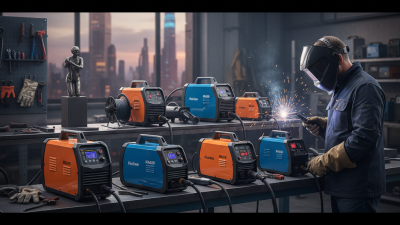
Leave Your Message
-
 WeChat Online Service
-

-

-


-


Choosing the best Wire Feed Welder in 2026 starts with the work in front of you, not the largest number on a product label. A machine that handles thin sheet metal smoothly may struggle with thick plate or long production runs. Consider the materials you weld, their thickness, available power, and how often you work. Then compare the welder’s output range, wire sizes, drive system, and compatibility with solid or flux-cored wire. Small details matter. A steady feed can mean fewer stops and more consistent beads. A cramped spool compartment can make routine changes frustrating.
Welding engineer Duane Miller’s practical selection principle can be summed up this way: “Choose the process for the joint, then choose a machine that controls it well.” Treat that as guidance, not a substitute for checking each manufacturer’s specifications. Look for clear duty-cycle ratings, accessible controls, dependable service support, and a torch that feels comfortable in your hand. If possible, test the machine on a sample piece of the metal you actually use. Listen to the arc. Watch the bead. It may reveal more than a polished sales page.
There is no perfect choice for everyone. A hobbyist repairing a gate has different needs from a shop joining steel every day. Even experienced welders can misjudge a machine before trying it. This guide explains how to compare real-world capability, cost, and ease of use, so you can choose a Wire Feed Welder that fits your work—and know where its limits are.
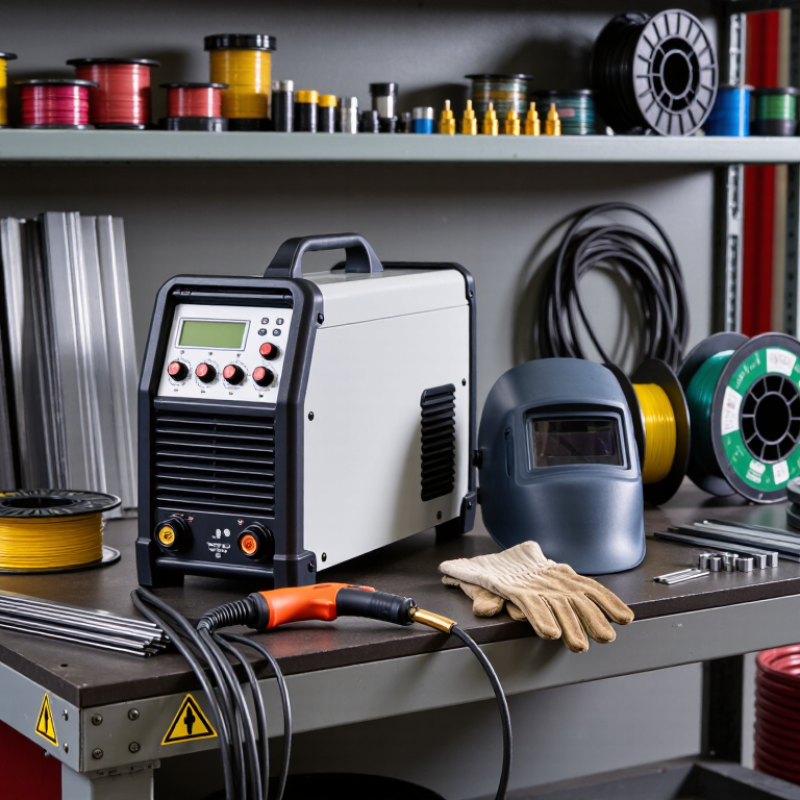
The best wire-feed welder depends on the process your work actually needs. GMAW with solid wire uses external shielding gas, so a breeze can disturb protection around the weld. It suits clean, prepared steel and controlled indoor work, including thinner sheet where a steady arc matters. There is little slag to remove. That saves time. But it does not make setup foolproof: match wire diameter, gas, polarity, and feed speed to the material and joint.
FCAW uses tubular, flux-filled wire. Self-shielded wire can be more practical outdoors, while gas-shielded FCAW may suit shop work requiring higher deposition. Both leave slag, and flux-cored welding can produce more fumes; plan ventilation and cleanup accordingly. Check the machine’s rated duty cycle and supported wire range before buying. AWS’s 2023 Welding Workforce Data report projected that the United States would need nearly 360,000 new welding professionals by 2027. That figure is not a process comparison, but it highlights why training and repeatable settings matter. A test bead on scrap is still worth the wire. A detail people miss. The wrong process choice can feel manageable at first, then cost time on every repair.
| Selection Factor | GMAW with Solid Wire | FCAW with Flux-Cored Wire | What to Check Before Choosing |
|---|---|---|---|
| How the process works | A continuously fed solid electrode forms the arc. Shielding gas is supplied from an external cylinder. | A continuously fed tubular electrode contains flux. Self-shielded wire generates shielding from the flux; gas-shielded wire uses external shielding gas as well. | Confirm whether the specific flux-cored wire is self-shielded or requires gas. “FCAW” can describe either type. |
| Typical shielding setup | Uses an external gas supply. Argon–carbon dioxide blends and carbon dioxide are common choices for carbon-steel work; the correct gas depends on the wire and application. | Self-shielded FCAW does not require a gas cylinder. Gas-shielded FCAW requires the shielding gas specified for its wire. | Include the cost and availability of gas, regulator, hoses, and cylinders when comparing setups. |
| Best environment | Well suited to indoor work or other areas where shielding gas can be protected from drafts. | Self-shielded FCAW is often more practical outdoors because it does not rely on an external gas shield, although strong wind can still disrupt the arc and affect weld quality. | For outdoor work, assess wind exposure and follow the wire manufacturer’s recommendations; no process is immune to severe drafts. |
| Weld appearance and cleanup | Typically produces no slag layer, so there is usually less post-weld cleanup. Spatter and bead appearance depend on settings, materials, and technique. | Produces slag that must generally be removed between passes and after welding. Slag coverage is part of the process, not a substitute for proper technique. | Consider whether reduced cleanup or the ability to weld in more exposed conditions matters more for the job. |
| Position and wire choice | Position capability depends on the wire classification, diameter, settings, and joint. Some solid wires are designed for specific transfer modes or positions. | Many flux-cored wires are available for different positions, but suitability varies by wire classification and diameter. Some wires are limited to flat or horizontal welding. | Check the wire’s classification and permitted welding positions rather than assuming every wire is suitable for all-position work. |
| Polarity | Solid-wire GMAW commonly uses electrode positive (DCEP). | Self-shielded FCAW often uses electrode negative (DCEN), while gas-shielded FCAW commonly uses electrode positive (DCEP). Exceptions exist. | Use the polarity stated on the wire data sheet or packaging. Do not select polarity based on process name alone. |
| Fumes and safety | Welding fumes and gases are still produced; adequate ventilation and appropriate protective equipment are required. | Flux-cored welding can produce substantial fumes and slag. Adequate ventilation, suitable protective equipment, and safe handling are essential. | Review the safety data sheet for the consumable and assess ventilation requirements for the actual workspace. |
| Common applications | Frequently used for fabrication, sheet metal, automotive repair, and production work where a clean, controlled setup is available. | Frequently used for structural and general fabrication, repair, and work where the selected wire’s characteristics suit the conditions. | Match the process to the material, joint design, position, applicable welding code, and required quality level. |
| Welder features to compare | For either process, compare the machine’s rated output and duty cycle, input power, wire-feed range, compatible wire diameters, spool capacity, polarity-change options, and availability of a suitable gun and drive rolls. | Check the manufacturer’s duty-cycle rating at the output you expect to use. Verify the machine can feed the chosen wire reliably and is compatible with your power supply. | |
| Good starting choice when… | You mainly weld indoors, can use shielding gas, and prefer a process with no slag cleanup. | You need a self-shielded option for work where carrying or protecting an external gas supply is impractical, and you can manage slag and fumes. | Choose based on your actual work conditions and consumable requirements—not on the welder’s process label alone. |
Note: Wire classifications, recommended gases, polarity, position capability, and operating parameters vary by consumable. Always follow the wire data sheet, welder manual, and applicable welding procedure.