Leave Your Message

How to Choose the Best Gas MIG Welder for Your Business

Choosing the right Gas Mig Welder can affect more than weld appearance. It shapes production speed, repair costs, operator comfort, and the consistency customers see in every finished part. A machine that handles thin sheet metal may struggle with long, demanding shifts. One built for heavy fabrication can be costly and cumbersome for a small workshop. The right choice depends on the work your business actually performs.

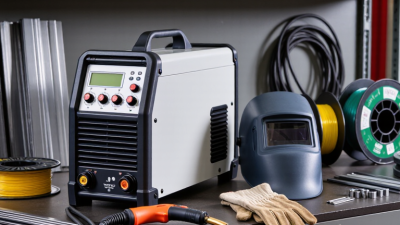
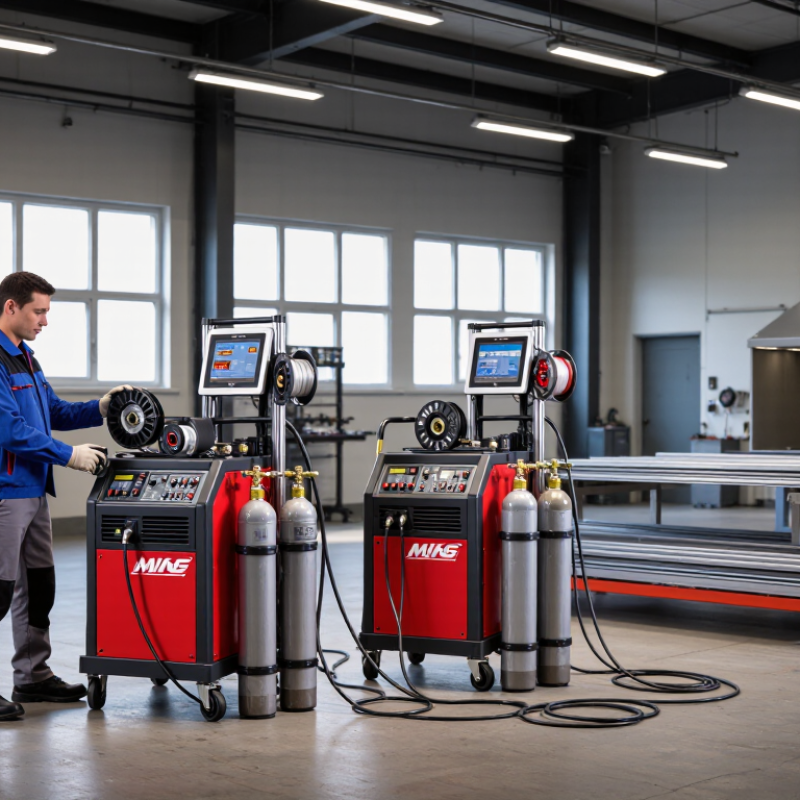
Before comparing models, look closely at your daily jobs. Note the metals and thicknesses you weld, the length of typical welds, and how often the machine runs. Picture a busy afternoon: wire feeding steadily, a cylinder secured nearby, and an operator reaching for controls without interrupting the work. Those practical details matter. So do duty cycle, available power, wire-feed stability, service access, and the cost of consumables. A low purchase price can hide inconvenient trade-offs.

A welder’s advice is useful only when its source can be checked. No supporting article or verified expert quotation was supplied for this introduction, so I won’t invent a name or put words in someone’s mouth. That is a limitation worth acknowledging. The guide ahead can still help business owners compare Gas Mig Welder options against real shop requirements, weigh features against workload, and identify questions to ask suppliers before investing. A careful choice may not be perfect. It should, however, fit the work rather than the sales pitch.
How to Choose the Best Gas MIG Welder for Your Business

Understanding Gas MIG Welding and Its Business Applications

Gas MIG welding feeds a continuous

How to Choose the Best Gas MIG Welder for Your Business - Understanding Gas MIG Welding and Its Business Applications
Selection factor What to assess Business relevance Practical guidance
Welding process Gas metal arc welding (GMAW), commonly called MIG welding, feeds a continuously supplied wire electrode while shielding gas protects the weld pool. Continuous wire feed can support productive work on repeated joints and fabrication runs. Confirm the machine supports the wire types and transfer modes required for your materials and procedures.
Materials and thickness Identify the metals, thickness range, joint designs, and positions used in typical jobs. Steel, stainless steel, and aluminum require suitable wire, gas, and setup choices. Matching capacity to actual work helps avoid underpowered equipment or paying for unused capacity. Use manufacturer procedure charts as a starting point, then qualify settings with test coupons and applicable welding requirements.
Output and duty cycle Compare rated output with the amperage and voltage needed for the work. Duty cycle states the percentage of a defined 10-minute period that a welder can operate at a specified output without exceeding its thermal limit. Insufficient output or duty cycle can cause production pauses; ratings should be compared at the same output. Check the rating plate and technical data for the duty-cycle percentage and corresponding amperage before purchase.
Input power Check supply voltage, phase, current demand, plug type, and circuit requirements against the facility's available electrical service. Electrical compatibility affects installation cost, machine placement, and whether planned output is available. Have a qualified electrician verify the circuit and local electrical requirements; do not rely on plug fit alone.
Shielding gas Gas selection depends on base metal, wire, and welding procedure. Argon-rich mixes are commonly used for aluminum and some stainless-steel applications; argon-carbon dioxide mixes are common for steel. Pure carbon dioxide is also used for some steel welding. Gas availability, cylinder handling, and consumption contribute to operating cost and workflow. Follow the wire and procedure recommendations. Provide secure cylinder storage and suitable gas-flow equipment.
Wire feeding system Evaluate wire diameter range, spool capacity, drive-roll options, liner compatibility, and feed control. Reliable feeding reduces stoppages and helps maintain consistent arc performance, especially on longer production runs. Check that drive rolls and liners match the selected wire. Soft aluminum wire may require a compatible spool gun or push-pull system.
Controls and repeatability Consider voltage and wire-feed adjustment, preset programs, parameter displays, and the ability to record or reproduce settings. Clear, repeatable controls can shorten setup and help different operators follow established procedures. Prioritize controls that match operator skill and job complexity; verify settings through documented procedures.
Portability and environment Assess machine weight, handle and wheel design, cable length, work location, and exposure to drafts or outdoor conditions. Shielding gas can be disrupted by wind, making gas-shielded MIG less suitable for exposed outdoor work without effective wind protection. For mobile work, plan transport and gas-cylinder restraint. Consider a suitable flux-cored process where conditions make gas shielding impractical.
Safety and ventilation Account for welding fumes, ultraviolet radiation, hot work, electrical hazards, compressed gas, and the base-metal coating or contents. Appropriate controls protect workers and support compliance with applicable workplace rules. Provide task-appropriate PPE, ventilation or fume extraction, trained operators, and safe cylinder handling under local requirements.
Total cost of ownership Include purchase price, installation, gas, wire, contact tips, liners, electricity, maintenance, downtime, and operator training. The lowest initial price may not deliver the lowest cost per finished weld. Compare expected consumable use, service access, warranty terms, and planned utilization over the machine's working life.
Best-fit application Common business uses include sheet-metal fabrication, equipment repair, structural fabrication, and production welding, subject to qualified procedures and applicable codes. Work mix determines the useful balance of output, portability, setup flexibility, and production features. List typical jobs, materials, thicknesses, and daily arc time before comparing machines; validate the shortlist with representative test welds.

Defining Your Material, Thickness, and Production Requirements

A dependable gas MIG welder starts with the work on your floor, not a specification sheet.

List the metals you weld most often, such as mild steel, stainless steel, or aluminum. Each material behaves differently under heat and may call for a different wire, shielding gas, and setup.

Check the gas recommendations for the specific wire and base metal; a familiar shop mix is not automatically suitable for every job. Ask your welding supervisor or consult a qualified welding procedure when the application has strict requirements.

Measure the material you actually use. Thin sheet can warp or burn through when heat is difficult to control, while thicker plate may need more output or multiple passes.

Try sample welds at the edges of your normal thickness range. Watch for burn-through, incomplete fusion, and excessive spatter. The ideal setting is not always obvious.

That is worth checking twice.

Production needs matter just as much. Estimate how long the welder will run within each duty-cycle period, and compare that with the machine’s rated output.

A unit that handles occasional repairs may struggle through repeated long welds. Consider wire-feed consistency, available input power, and whether operators need to move the machine between stations.

One detail is easy to overlook: a high-output welder cannot compensate for poor fit-up or inconsistent technique. Include those realities in your trial, even if they complicate the choice.

Evaluating Power Output, Duty Cycle, and Wire Feeding Performance

A gas MIG welder’s rated amperage matters only when it matches the materials and production pace your shop actually handles. For thin sheet, excessive output can burn through a joint; thicker sections may require more current and multiple passes. Check the machine’s rated output at the voltage you expect to use, then compare it with your typical wire size and metal thickness. The American Welding Society’s Welding Handbook describes how voltage, wire feed speed, electrode size, and shielding gas interact to shape the arc. A higher power rating alone does not guarantee faster, cleaner work. Fit matters.

Duty cycle shows how long a welder can operate within a stated period at a given output. IEC 60974-1 rates welding power sources using a 10-minute time basis, so a 60% duty cycle means six minutes welding and four minutes cooling at the specified conditions. Read the rating at the amperage your jobs require; a machine’s duty cycle usually falls as output rises. Then test wire feeding with the actual spool, liner, and torch setup. Listen for pulsing or stuttering, and inspect a bead for uneven width. Small feed problems add rework. I would not judge performance from one short demonstration; wire tension and cable routing can change the result, and that is easy to overlook.

Choosing Shielding Gas and Checking Workplace Compatibility

For a business choosing a gas MIG welder, shielding gas must match the metal, wire, and work area. Argon-rich blends generally support a stable arc on steel and stainless steel, while carbon-dioxide-rich shielding can increase penetration and spatter. Pure carbon dioxide is often economical, but it may require more cleanup. Check the wire manufacturer’s classification and welding procedure before ordering cylinders. A small test bead on the actual material can expose problems that a catalog comparison misses.

The workplace matters just as much. Argon and carbon dioxide can displace oxygen, especially in pits, tanks, and other poorly ventilated spaces. OSHA defines an oxygen-deficient atmosphere as below 19.5 percent oxygen (29 CFR 1910.146). That number is not a ventilation target; measure the work area and follow a site-specific safety assessment. Keep cylinders secured, route hoses away from hot work, and provide local exhaust where fumes collect. Even a familiar setup can become unsafe when a job moves into a tight corner.

Before buying, compare the gas supplier’s available blends with your production needs and storage limits. Record gas flow, bead appearance, and rework on representative joints. A high flow setting may waste gas, while drafts can disrupt shielding despite a full cylinder. There is no perfect blend for every job. That is inconvenient, but worth admitting. Sources: OSHA’s permit-required confined-spaces standard and the American Welding Society’s guidance on shielding-gas selection.

Comparing Total Ownership Costs, Reliability, and Supplier Support

Choosing a gas MIG welder for a business means looking beyond its purchase price. Add the cost of shielding gas, wire, contact tips, liners, routine servicing, and downtime. A machine that runs two shifts each day has different ownership costs from one used for occasional repairs. Estimate annual hours and consumable use from actual job records, not optimistic projections.

Reliability is visible in small details. Check whether drive rolls feed wire steadily, settings remain consistent between jobs, and common wear parts are easy to replace. Ask a qualified technician to inspect the machine under a representative load. A short demonstration helps, though it cannot predict every fault. That uncertainty deserves a line in the budget.

Supplier support can change the real cost of ownership. Ask about technician availability, parts stock, response times, and practical training for operators. Confirm what the warranty covers and what it excludes, in writing. A low quote may still make sense, but only if service access fits your production schedule. Keep a simple log of faults and repair time; it may reveal that your original cost estimate was wrong.

How to Choose the Best Gas MIG Welder for Your Business

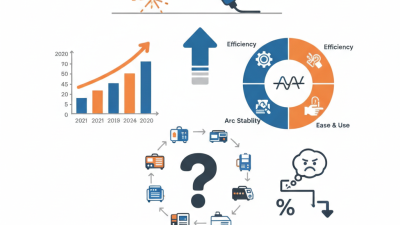
Illustrative five-year ownership cost comparison for three equipment tiers (USD).

The example estimates include purchase price, consumables, maintenance, and downtime. Higher upfront cost does not always mean lower total cost: compare supplier warranty coverage, parts availability, service response, and quotes based on your expected workload. Replace these planning estimates with your own operating data before purchasing.