Leave Your Message

China Top TIG Welding Machine Suppliers for Global Buyers

Choosing a reliable TIG Welding Machine supplier requires more than comparing prices, power ratings, or attractive product photographs. Global buyers need evidence of manufacturing experience, stable quality control, responsive technical support, and clear documentation. A dependable supplier should explain torch design, inverter stability, duty cycle, pulse control, shielding-gas needs, and spare-parts availability without hiding practical limitations.

Welding metallurgy expert John C. Lippold has stated, “Weldability depends on the material, the process, and the conditions.” This principle matters when selecting equipment for stainless steel, aluminum, titanium, or thin sheet applications. A machine that performs well in a showroom may struggle beside a windy workshop door, where gas coverage becomes unstable. Real operating details matter.

This guide examines China’s leading TIG Welding Machine suppliers for international purchasers. It considers factory capability, certifications, customization experience, export service, and user feedback. It also looks beyond polished catalogs. Can the supplier provide repeatable arc performance? Can engineers troubleshoot a fluctuating pulse or weak aluminum penetration? Are replacement boards, torches, and foot pedals available after delivery?

Some evaluations remain imperfect. Online reviews may be incomplete, and certification documents require careful checking. A low quotation can also conceal limited support or inconsistent components. Buyers should request sample welds, inspection records, warranty terms, and realistic lead times. The strongest supplier is not always the largest one. It is the partner that communicates clearly, tests honestly, and supports the machine after it reaches the customer’s workshop.
China Top TIG Welding Machine Suppliers for Global Buyers

TIG Welding Defined: ISO 4063 Process 141 and Its Industrial Applications

TIG Welding Defined: ISO 4063 Process 141 and Its Industrial Applications

TIG welding, identified as ISO 4063 process 141, uses a non-consumable tungsten electrode. An inert gas, commonly argon, protects the arc and molten pool. Filler metal may be added separately. This gives welders precise control over heat, penetration, and bead shape. It is especially useful for stainless steel, aluminum, nickel alloys, and thin sections. The arc can look calm, but small changes in torch angle matter greatly.

Industrial applications include pressure piping, food-processing equipment, chemical systems, aerospace components, and precision fabrication. Process 141 often produces clean root passes and detailed joints. However, it is slower than many wire-fed processes. That trade-off is sometimes ignored during purchasing. Global buyers comparing Chinese TIG welding machine suppliers should examine current stability, pulse control, cooling performance, duty cycle, and documented quality procedures. Operator skill still affects results. A capable machine cannot correct poor joint preparation.

Tips: Confirm the machine’s rated output at your working voltage. Check whether the torch, gas system, and foot control suit your production method. Request test welds on your actual material and thickness. Review inspection records, service response, and spare-parts availability. Do not judge quality from a polished sample alone. Real factory conditions reveal more.
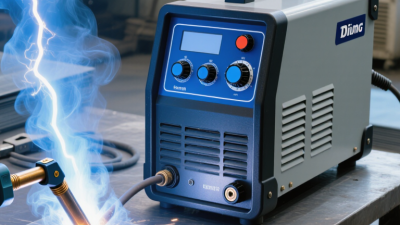

Core Specifications: AC/DC Output, Amperage Range, and Duty-Cycle Ratings

For global buyers, a TIG welding machine should be judged by measurable output, not marketing language. AC/DC capability supports both aluminum and steel applications. AC controls arc cleaning, penetration, and frequency, while DC suits stainless steel, carbon steel, and copper. A practical machine may provide 5–200 A for light fabrication, while industrial units often reach 315 A or higher.

Look closely at duty-cycle ratings. IEC 60974-1 evaluates welding power sources under defined thermal conditions, commonly using a 40°C ambient temperature. A rating of 200 A at 60% means six minutes of welding within a ten-minute period. It does not mean continuous operation. Some suppliers present impressive peak amperage, but the lower continuous rating matters more. Check the test voltage, ambient temperature, and cooling method.

Industry research supports careful specification matching. Grand View Research reported steady growth in the global welding equipment market, with automation and energy efficiency influencing purchasing decisions. MarketsandMarkets also identified rising demand for versatile equipment in fabrication and repair sectors. These reports do not replace testing. A supplier should provide verified output curves, insulation-class details, and duty-cycle certificates. Requesting a sample weld is sensible. I would also question unusually broad amperage claims. They may be technically correct, yet poorly useful in daily production.

China’s Leading TIG Suppliers Compared by EN 60974-1 Compliance

For global buyers, comparing China’s TIG welding machine suppliers should begin with evidence, not catalogue claims. EN 60974-1 addresses safety and performance requirements for arc welding power sources. It covers insulation, temperature rise, output characteristics, protection, and marking. A compliant-looking label is not enough. Ask for the exact standard edition, test report, and declaration of conformity. Evidence matters.

Experienced procurement teams should examine whether documents identify the tested model, rated input, duty cycle, and production site. They should also check the laboratory’s competence and accreditation scope. A report for one power source does not automatically cover every variation. Request serial-number traceability, factory quality records, and sample inspection results. This is where supplier comparisons become practical. Ask for records. During live trials, monitor arc stability, current response, cooling behavior, and fault protection under realistic loads. A clean showroom weld proves little.

Reliable suppliers explain deviations instead of hiding them. They can describe component substitutions, software revisions, and retesting procedures. Buyers should confirm voltage, frequency, plug, and environmental assumptions for the destination market. EN 60974-1 compliance supports a safer purchasing decision, but it does not replace installation checks or local requirements. Some documentation may be incomplete or outdated. That gap matters. An independent pre-shipment inspection can expose mismatched labels, missing warnings, or performance differences before containers leave the factory.

Quality Verification: CE Certification, IEC Testing, and Factory Data

When global buyers compare TIG welding machine suppliers, quality verification should begin with documents, not polished photos. A valid CE certificate identifies the covered product, manufacturer, standards, and certification scope. Check whether the model number matches the machine offered. An outdated or incomplete certificate raises questions.

IEC testing adds useful technical evidence. Ask for reports covering electrical safety, insulation, leakage current, and electromagnetic compatibility. The report should show test methods, measured results, and laboratory details. Do not accept a single page with only a passing statement. Small differences matter. A 220-volt model and a 380-volt model may require different evaluations.

Factory data reveals how consistently the supplier builds each unit. Request welding current ranges, duty cycles, input power, protection ratings, and temperature-rise records. Compare these figures with nameplates and user manuals. During a factory audit, inspect serial-number tracking, calibration labels, cable connections, and cooling-fan operation. A short live welding test can expose unstable arc control or excessive heat.

Documentation can still be imperfect. That is normal. The real concern is unexplained inconsistency. Buyers should record questions and request dated revisions. Even experienced purchasers may trust a certificate too quickly. Independent verification costs time, but it can prevent costly returns, unsafe installations, and production delays.

Global Buying Process: MOQ, Export Documents, Warranty, and After-Sales Support

For global buyers, MOQ should match testing risk, not only factory capacity. A practical trial order is often one to five TIG machines, with spare torches and consumables included. Ask for serial-number tracking, input-voltage confirmation, and a pre-shipment video test. HS 8515 in the International Trade Centre’s Trade Map covers electric welding equipment, helping buyers compare customs classifications and trade flows. Prices alone mislead.

Export paperwork needs equal attention. Request a commercial invoice, packing list, bill of lading, certificate of origin when required, and a product conformity declaration. The World Bank’s 2023 Logistics Performance Index covers 139 economies and measures customs efficiency, shipment handling, and delivery reliability. These factors can affect landed cost. Check whether the invoice describes the machine accurately. Small wording errors can delay clearance.

A written warranty should state the coverage period, excluded damage, repair route, and replacement-part policy. Twelve months is common, but conditions differ. Ask about torch assemblies, control boards, cooling fans, and delivery times for spare parts. A useful after-sales agreement includes a response target, remote fault diagnosis, service manuals, and technician training. Require test records before payment. I would not rely on vague promises. This remains a weak point in many sourcing plans. A buyer may also request one sample unit before approving a larger MOQ.